Voyager 1 becomes first spacecraft one light-day from Earth
NASA’s Voyager 1 reached one light-day from Earth on 18 November, about 25.9 billion km away, the farthest any human-made object has ever travelled.
Key points
- Voyager 1 crossed one light-day from Earth at 2:16 a.m. PST on 18 November 2026
- It is about 25.9 billion km away; a signal now takes 24 hours each way
- No science or engineering data since 14 November; engineers are analysing the issue
- Both Voyagers turn 50 in August and September 2027
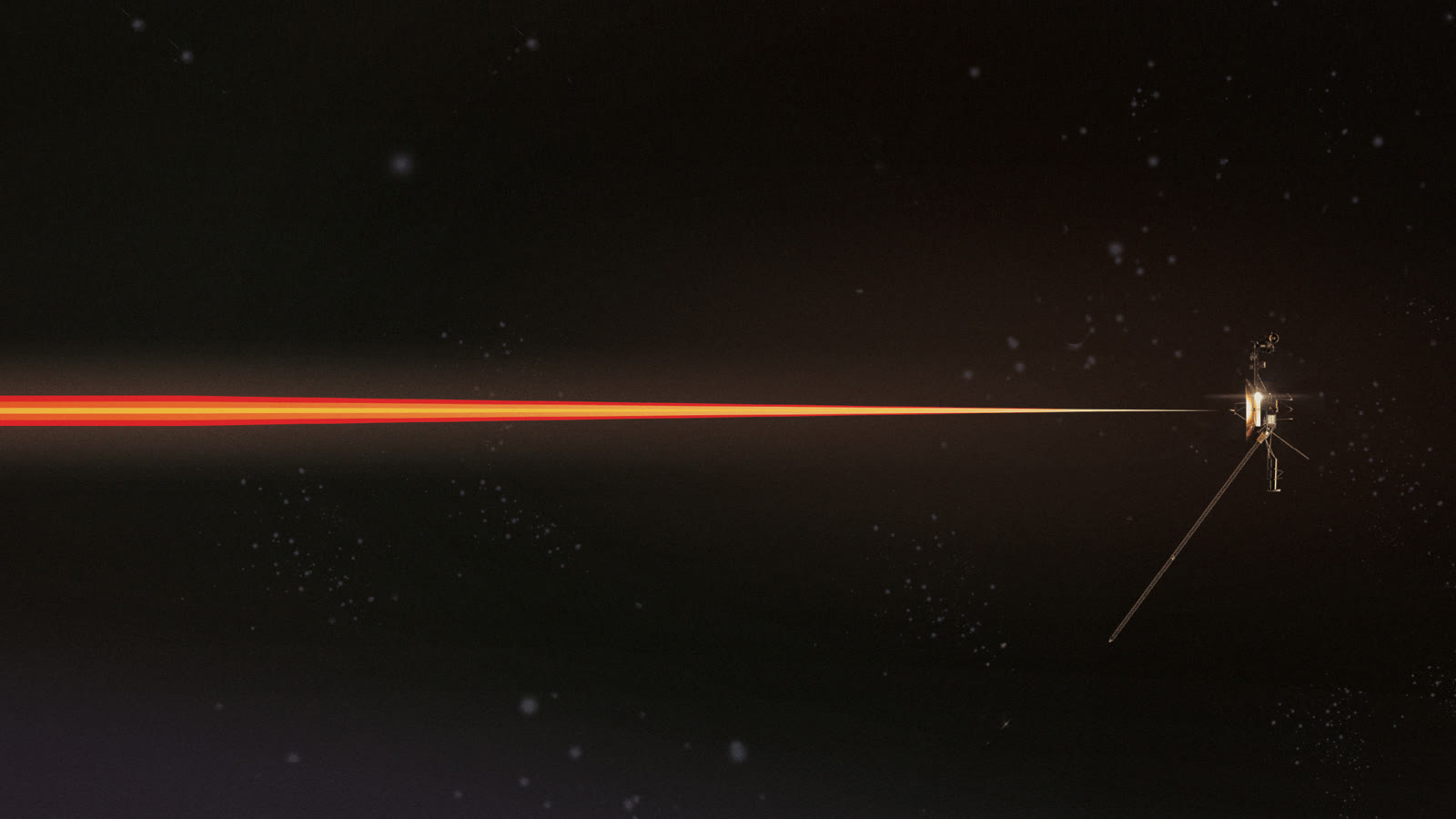
PASADENA, California — NASA’s Voyager 1 became the first human-made object to travel one light-day from Earth on Wednesday, 18 November 2026. The probe crossed the mark at 2:16 a.m. Pacific time, about 25.9 billion kilometres (16.1 billion miles) from home.
A light-day is the distance light travels in 24 hours. A radio signal sent to Voyager 1 now takes a full day to arrive, and the reply takes another day to come back.
NASA’s Jet Propulsion Laboratory (JPL), which runs the mission, heard back from the spacecraft early on Thursday, 24 hours after the crossing.
Half a century on the road
Voyager 1 launched in 1977 on a tour of Jupiter and Saturn. It never stopped. The probe now travels at about 61,000 km/h (38,000 mph).
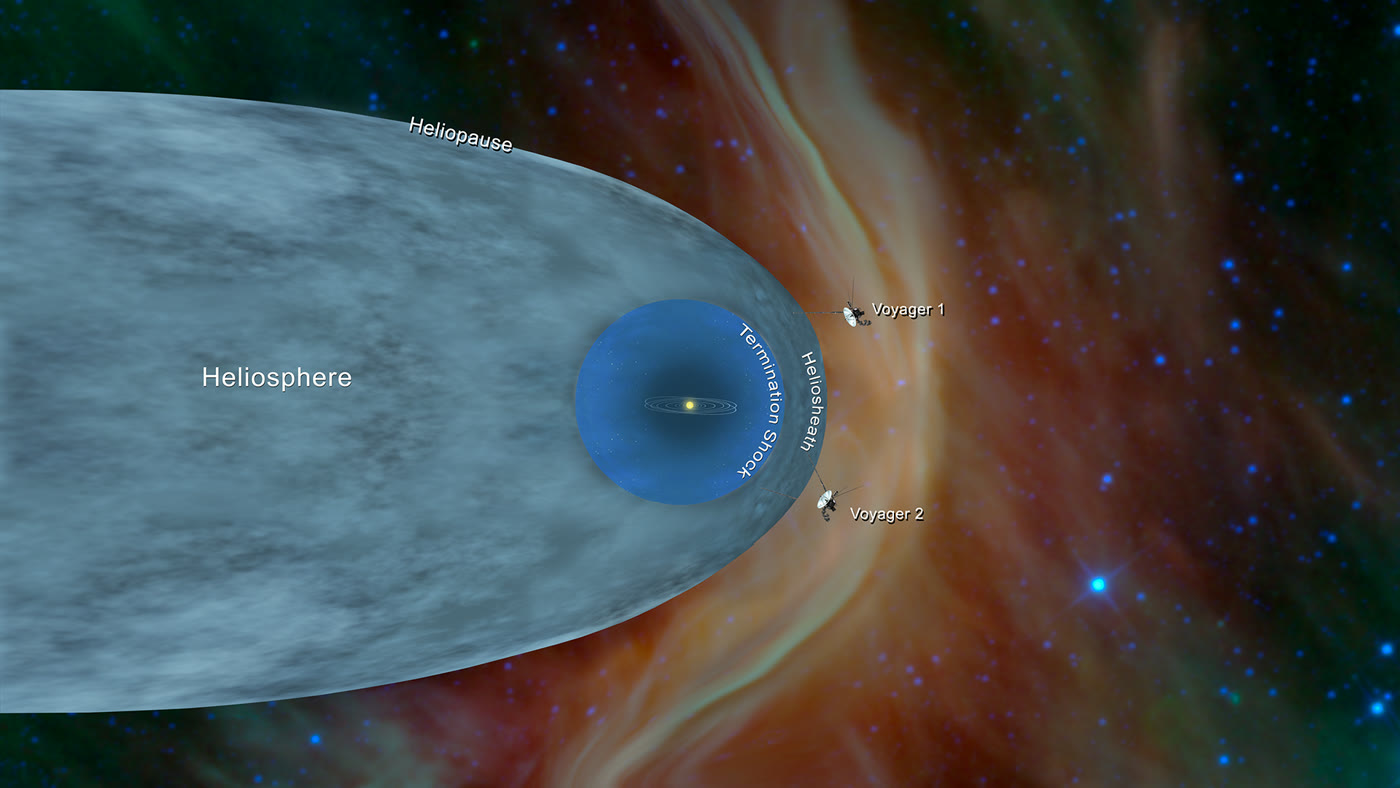
In 2012 it became the first spacecraft to enter interstellar space, the region beyond the bubble of solar wind that surrounds our solar system. Its twin, Voyager 2, crossed the same boundary in 2018 and is not expected to reach a light-day until 2035, Space.com reported.
“Traveling a light-day is a singular feat for a spacecraft, but Voyager is so much more than a distant traveler,” said Joe Westlake, director of the Heliophysics Division at NASA Headquarters.
Dave Gallagher, JPL’s director, called the crossing “yet another historic feat on an extraordinary voyage of discovery.”
A quiet week far from home
The milestone came during a technical problem. Voyager 1 has sent no science or engineering data since 14 November, NASA said. It is still sending a carrier signal, which engineers combined with trajectory calculations to confirm the crossing. The team is still analysing the issue.
Last month the probe also stopped answering commands for about 48 hours before recovering, Space.com reported.
Communication is slow but routine. “We listen to Voyager 1 every day and send commands to the spacecraft weekly,” said Suzanne Dodd, Voyager project manager at JPL.
Running out of power
Each Voyager loses about 4 watts of power a year. Engineers have switched off instruments one by one to keep the most important ones running. At launch in 1977, each probe had about 470 watts.
Earlier this year the team turned off three devices on Voyager 1 and switched to lower-power alternatives. NASA expects the power-saving work to keep both probes’ current science instruments working until at least the 50th anniversary of their launches next summer.
Voyager 1 still measures magnetic fields and plasma in interstellar space, data no other spacecraft can collect.
“Nearly half a century after leaving Earth, the Voyager mission continues to push the boundaries of human exploration,” said Ray Jayawardhana, president of Caltech, which manages JPL for NASA.
What happens next
- Engineers are working to restore science and engineering data, missing since 14 November.
- Both Voyagers mark 50 years in space in August and September 2027.
- Voyager 2 is expected to reach a light-day in 2035, if it is still operating.
With inputs from NASA, JPL and Space.com.
Read next
 Breaking
Cyclone Akvan makes landfall in Odisha; 300,000 evacuated

Ramayana: Part I crosses ₹800 crore in India in 15 days, breaks Bollywood’s Kerala jinx
Antibiotics are failing in India: what World AMR Awareness Week means for you