India crosses 1 crore HPV vaccine doses in under 9 months: which states lead, and why it matters for cervical cancer
India has given more than 1 crore HPV vaccine doses since February 2026, covering about 87% of the 1.2 crore girls targeted. Six states have reached 100% of their target. Here is what the vaccine does and how girls can get it.
Key points
- More than 1 crore HPV vaccine doses given under the national campaign since February 2026
- About 87% of the 1.2 crore targeted girls have been covered
- Gujarat, Uttar Pradesh, Andhra Pradesh, Mizoram, Madhya Pradesh and Bihar reached 100% of their targets
- Uttar Pradesh leads in numbers with more than 29.33 lakh girls vaccinated
- HPV infection causes almost all cases of cervical cancer
India's national campaign against cervical cancer has passed a major milestone. More than 1 crore doses of the HPV vaccine have been given to girls in less than nine months, the Health Ministry announced on 21 November.
Key numbers
- 1 crore+ doses since the campaign began in February 2026.
- About 87% of the 1.2 crore targeted girls covered.
- 6 states at 100%: Gujarat, Uttar Pradesh, Andhra Pradesh, Mizoram, Madhya Pradesh and Bihar.
- Close behind: Assam 95.6%, Telangana 95.3%, Karnataka 93.2%, Uttarakhand 90.2%.
- Lagging: Kerala at 77%.
What is HPV, and why does it matter?
The human papillomavirus (HPV) is a very common virus. Long-lasting infection with certain types causes almost all cases of cervical cancer, one of the most common cancers among Indian women. The vaccine works best when given before any exposure to the virus, which is why it is given to young girls.
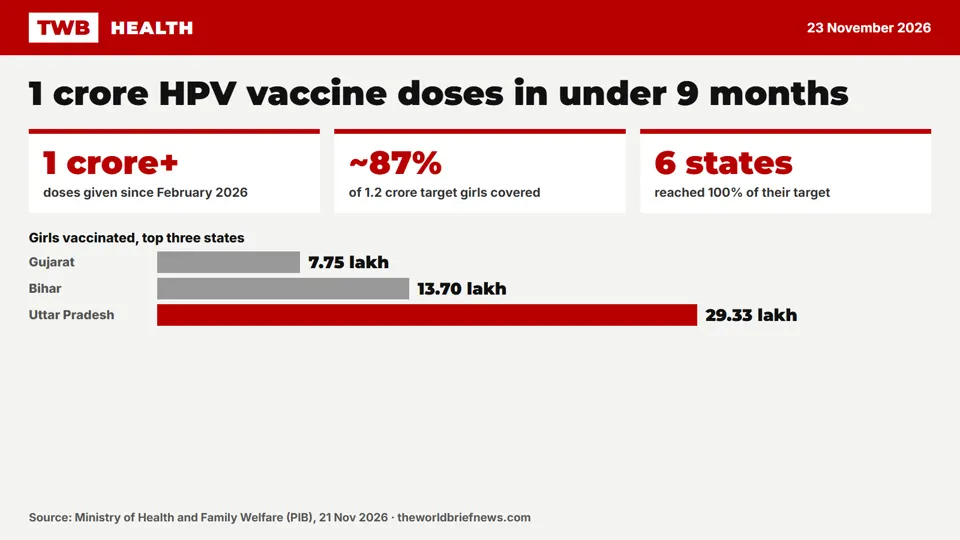
Which states vaccinated the most girls?
- Uttar Pradesh: more than 29.33 lakh girls
- Bihar: more than 13.70 lakh
- Gujarat: more than 7.75 lakh
How can a girl get the vaccine?
- The vaccine is free under the government campaign, given in schools and health centres.
- Ask your nearest government health centre, ASHA worker or school about eligibility and dates.
- HPV vaccination does not replace screening: women should still get regular cervical cancer checks as adults.