Supreme Court Seeks Centre, ECI and Law Commission Reply on Closing Anti-Defection Resignation Loophole
Supreme Court seeks responses from the Centre, ECI, and Law Commission on a PIL targeting MPs and MLAs who resign to evade anti-defection disqualification.
Key points
- Supreme Court issued notices on Nov 23 to the Centre, ECI, and Law Commission over Tenth Schedule resignation loopholes.
- The PIL seeks to stop MPs and MLAs from evading disqualification and ministerial bars by resigning pre-emptively.
- Next hearing is returnable December 4, 2026, tagged alongside a Tamil Nadu by-election cost-recovery plea.
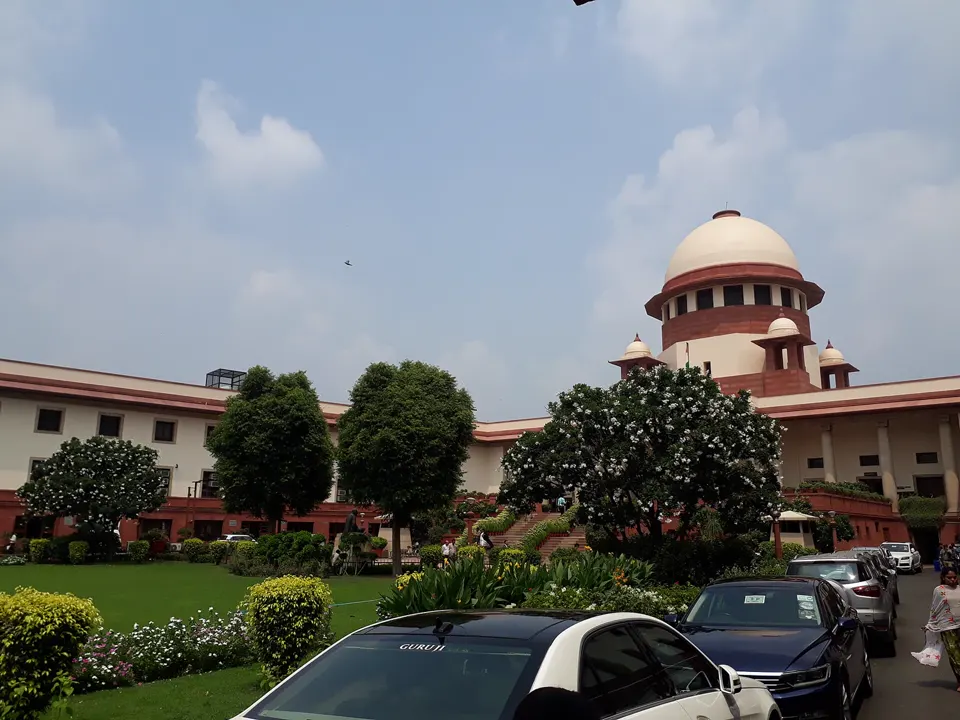
The Supreme Court of India has opened a fresh constitutional examination into one of the most contentious loopholes in Indian parliamentary democracy: elected legislators tendering strategic resignations to dodge disqualification under the anti-defection law. On Monday, November 23, 2026, a three-judge bench headed by Chief Justice of India Surya Kant issued formal notices to the Union Government, the Election Commission of India (ECI), and the Law Commission of India on a Public Interest Litigation seeking sweeping reforms to the Constitution's Tenth Schedule.
Hearing A. Sethu v. Union of India & Ors. alongside Justices Joymalya Bagchi and V. Mohana—with Senior Advocate A. Sirajudeen appearing for petitioner A. Sethu—the bench made the notices returnable by December 4, 2026. The Court also tagged the petition with a related pending plea, K. Suthan v. Union of India & Ors., arising out of Tamil Nadu after legislators allegedly switched allegiances to Tamilaga Vettri Kazhagam (TVK) and resigned to contest fresh by-elections.
Why Resignations Became a Political Escape Hatch
Enacted via the 52nd Constitutional Amendment in 1985 and tightened through the 91st Amendment in 2003, the Tenth Schedule was meant to stop "Aya Ram, Gaya Ram" floor-crossing. Under Articles 75(1B) and 164(1B), a legislator disqualified for defection is barred from becoming a minister or holding a remunerative political post until re-elected or until their term expires.
In practice, however, critics argue that Articles 101(3)(b) and 190(3)(b)—which govern voluntary resignations—have collided with prolonged delays by Speakers and Chairpersons deciding disqualification petitions. When MLAs or MPs facing imminent disqualification resign before the presiding officer rules, the House seat falls immediately vacant, shifting legislative arithmetic and letting turncoat lawmakers return through by-elections or escape Tenth Schedule penalties.
Five Key Reforms Sought Before the Supreme Court
- No Automatic Wipeout of Pending Cases: Declare that a resignation tendered while Tenth Schedule disqualification proceedings are pending or reasonably imminent does not automatically terminate or render those proceedings infructuous.
- Objective Scrutiny of Resignations: Require Speakers and Chairpersons to verify whether resignations are genuinely voluntary through reasoned, transparent orders backed by objective material.
- Strict Three-Month Adjudication Limit: Enforce a statutory outer timeline—such as three months—for deciding disqualification petitions and re-examine whether an independent permanent tribunal should replace Speaker-centric adjudication.
- Freeze on Ministerial & Political Posts: Bar legislators who resign while facing or anticipating defection proceedings from taking ministerial or remunerative political offices until the disqualification question is resolved.
- Floor Tests Inside Sworn Assemblies: Reaffirm that in hung assemblies, a government's majority must be tested exclusively on the floor of a duly constituted House after members take oath under Article 188, rather than through outside letters of support.
Constitutional Precedents and Past Reform Blueprints
The petition builds directly on major Supreme Court rulings that have struggled for decades to curb defection tactics. In Kihoto Hollohan v. Zachillhu (1992), the Court upheld the Tenth Schedule while ruling that Speakers act as quasi-judicial tribunals subject to judicial review. Later, in Shrimanth Balasaheb Patil v. Hon'ble Speaker, Karnataka Legislative Assembly (2019), the Court clarified that resignation and disqualification operate in distinct constitutional spheres—meaning resignation does not automatically erase a pending Tenth Schedule inquiry—while Keisham Meghachandra Singh (2020) urged Speakers to decide defection pleas within three months and called on Parliament to consider an independent tribunal.
Meanwhile, two landmark Law Commission reports sit largely unimplemented. The 170th Law Commission Report (1999) recommended eliminating split and merger exemptions and removing Speaker-led adjudication, while the 255th Law Commission Report (2015), chaired by Justice A.P. Shah, proposed transferring Tenth Schedule disqualification powers to the President or Governor acting on the binding advice of the Election Commission of India.
The Counter-Arguments: Separation of Powers and Legislative Policy
Any judicial rewrite of resignation and disqualification rules faces stiff constitutional pushback. Defenders of legislative autonomy cite Articles 122 and 212 of the Constitution, arguing that imposing rigid deadlines on presiding officers or altering the Tenth Schedule's adjudicatory machinery without a parliamentary amendment risks encroaching on the legislature's domain.
That tension already surfaced in the tagged K. Suthan dispute: the Madras High Court earlier dismissed the plea seeking a five-year cooling-off ban and recovery of by-election expenses from resigning MLAs, holding that such penalties fall squarely within Parliament's legislative policy prerogative. Separately, some constitutional scholars warn that tightening the Tenth Schedule further—without carving out space for principled conscience votes—concentrates excessive power in party high commands and reduces elected lawmakers to passive followers of party whips.
Why This Matters
From state assembly topplings to sudden mid-term by-elections that drain public funds, strategic resignations have repeatedly bypassed the spirit of India's anti-defection law. With notices going simultaneously to the Ministries of Law and Parliamentary Affairs, the ECI, and the Law Commission, the Court's review could force the first serious institutional reckoning on Tenth Schedule loopholes in over two decades.
What Happens Next
The Union Government, the Election Commission of India, and the Law Commission of India are expected to file preliminary responses ahead of the December 4, 2026 returnable date, when the Supreme Court will weigh both A. Sethu and K. Suthan together.
With inputs from official filings and statements, and the outlets listed below.