Quad Leaders Unveil 2027 Joint Patrol Flights, Indian Ocean Cable Push & Mumbai Forum in Manila
Quad leaders in Manila launched 2027 P-8/P-3C maritime exercises, Indian Ocean cable resilience, an $85M+ AI accelerator, and a Mumbai business forum.
Key points
- Quad leaders ended a two-year summit hiatus in Manila, launching first-ever joint P-8 and P-3C patrols in 2027.
- The pact backs Indian Ocean undersea telecom and electricity cables, cyber defense, and an $85M+ AI accelerator.
- India will host the inaugural Quad Business Leaders' Forum in Mumbai in early 2027 to anchor supply chains.
Leaders of the Quad—India, the United States, Australia, and Japan—revived their top-tier diplomatic summit in Manila on November 17, 2026, unveiling concrete operational commitments across maritime surveillance, undersea cables, cybersecurity, and artificial intelligence. For New Delhi, the 7th Quad Leaders' Summit delivers tangible security and economic dividends across the Indian Ocean and Indo-Pacific while keeping India's strategic autonomy and ASEAN partnerships front and center.
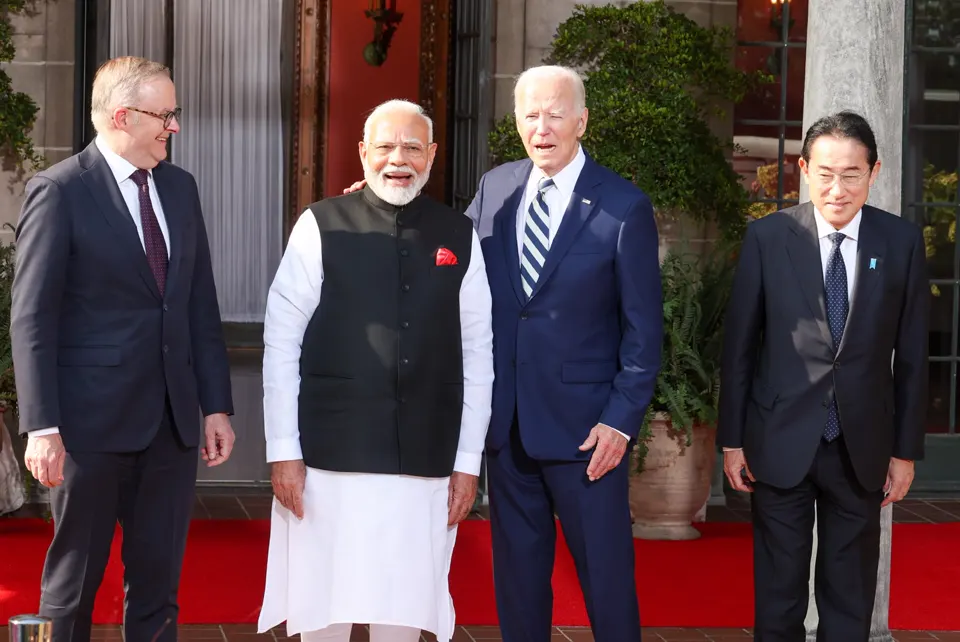
Held on the sidelines of the 49th ASEAN and East Asia Summits, the meeting broke an over-two-year pause since the September 2024 Delaware summit. It brought together Indian Prime Minister Narendra Modi, U.S. President Donald Trump (at his first Quad summit of his second term), Australian Prime Minister Anthony Albanese, and Japanese Prime Minister Sanae Takaichi (making her Quad summit debut), marking the first time a Quad Leaders' Summit was hosted inside a non-member country.
Five Concrete Agreements From the Manila Communiqué
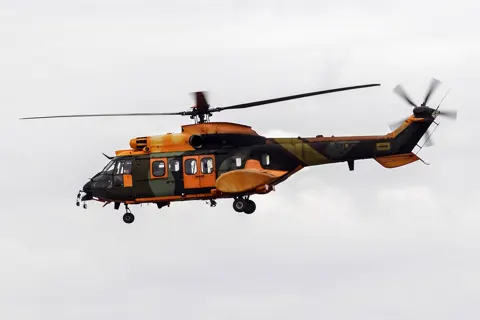
- First Joint Quad P-8 & P-3C Maritime Exercise (2027): Advancing the Indo-Pacific Maritime Surveillance Collaboration (IPMSC), the leaders announced that India, the U.S., and Australia's P-8 patrol aircraft alongside Japan's P-3C aircraft will fly together in a Quad-context maritime exercise for the first time in 2027—expected around March 2027 alongside U.S.-led Exercise Sea Dragon out of Guam.
- Indian Ocean Undersea Telecom & Power Cables: Under the expanded Quad Partnership for Cable Connectivity and Resilience, the joint statement explicitly welcomed upcoming undersea cable projects in the Indian Ocean to safeguard digital corridors, while Australia expanded funding to cover submarine electricity cables for regional grid security.
- Enhanced Quad Cybersecurity Cooperation: Acknowledging a "rapid increase in the number and scale of cyber incidents in the region," the four democracies launched deeper intelligence-sharing and resilience measures for banking, telecom, and energy networks.
- Super Intelligence / AI Accelerator ($85M+): Leaders affirmed operationalizing an Indo-Pacific AI / Super Intelligence Accelerator—backed by over $85 million in technical and financial support unveiled by Quad foreign ministers in Atlanta on October 31—to deploy trusted AI infrastructure. (In joint documents, Washington uses "Super Intelligence" under U.S. Executive Order 14434, with an explicit note confirming India, Australia, and Japan treat it synonymously with AI.)
- Inaugural Quad Business Leaders' Forum (Mumbai, Early 2027): Leaders announced a high-level private-sector forum in early 2027, which Indian officials confirmed will be hosted in Mumbai to build resilient manufacturing and critical-technology supply chains.
'Peace, Stability and Predictability': How the Leaders Framed the Quad
Across official readouts from India's Ministry of External Affairs (MEA), the White House, and Japan's Ministry of Foreign Affairs, the four nations avoided naming China directly while sending unmistakable signals against coercive trade and maritime tactics. The joint statement opposed "destabilizing or unilateral actions" that seek to change the status quo by force or coercion, and voiced "grave concerns about economic coercion, including through arbitrary export restrictions."
Prime Minister Modi anchored India's case in regional trust and continuity—recalling Manila's role in the Quad's 2007 officials' meeting and 2017 revival, noting Quad foreign ministers met five times over the past year, and tying the grouping to India's Act East Policy and MAHASAGAR maritime vision. "For India, the Quad is a constructive and trusted partnership," Modi said, emphasizing that "what the world needs today is peace, stability and predictability."
Australian PM Anthony Albanese underscored the grouping's economic heft—nearly $35 trillion in combined GDP and almost one-fifth of global trade—while Japanese PM Sanae Takaichi stressed giving regional states the "freedom to decide for themselves." President Trump struck an informal, upbeat note alongside the three prime ministers, calling Modi a "very tough man" and adding that Takaichi "may be even tougher."
What the Manila Package Means for India
- Stronger Eye in the Indian Ocean: Integrating Indian Navy P-8I Neptune aircraft into joint Quad P-8/P-3C patrol exercises moves cooperation from passive information sharing to active maritime interoperability across vital shipping lanes.
- Hardening Digital & Financial Lifelines: Explicit Quad backing for Indian Ocean subsea cable projects directly protects the undersea fiber backbone carrying India's cloud, fintech, and global enterprise traffic against sabotage or single-point disruptions.
- Critical Minerals & Supply-Chain Leverage: Pushing back collectively against "arbitrary export restrictions" supports India's domestic push to reduce dependence on concentrated rare-earth and semiconductor supply chains.
- Putting Mumbai at the Center of Quad Economics: Hosting the inaugural Quad Business Leaders' Forum in Mumbai positions India's financial capital as the commercial hub linking U.S., Japanese, and Australian capital with Indian manufacturing.
Why This Matters
Rather than turning into a rigid military pact that could alienate Southeast Asian neighbors, the Manila summit sharpens the Quad's focus on practical public goods—maritime visibility, subsea cables, cyber resilience, and trusted AI—areas where India gains direct strategic leverage across the Indian Ocean Region.
What Happens Next
India begins preparations to host the inaugural Quad Business Leaders' Forum in Mumbai in early 2027, while defense planners coordinate logistics for the 2027 Quad P-8 and P-3C maritime surveillance exercise and initial deployments under the $85 million+ AI Accelerator.
With inputs from official filings and statements, and the outlets listed below.