US judge strikes down Trump's second birthright citizenship order: what it means for Indian families
Judge Christopher Cooper ruled that the President cannot create new exceptions to birthright citizenship, protecting US-born children of some foreign-government staff and of foreign parents who use American surrogates.
Key points
- A federal judge in Washington, DC, struck down Trump's August 2026 order restricting birthright citizenship in a 67-page ruling
- The order targeted children of parents called 'alien enemies', certain foreign-government employees, and foreign parents using paid US surrogates
- Judge Christopher Cooper said the President 'cannot carve out new exceptions' to birthright citizenship
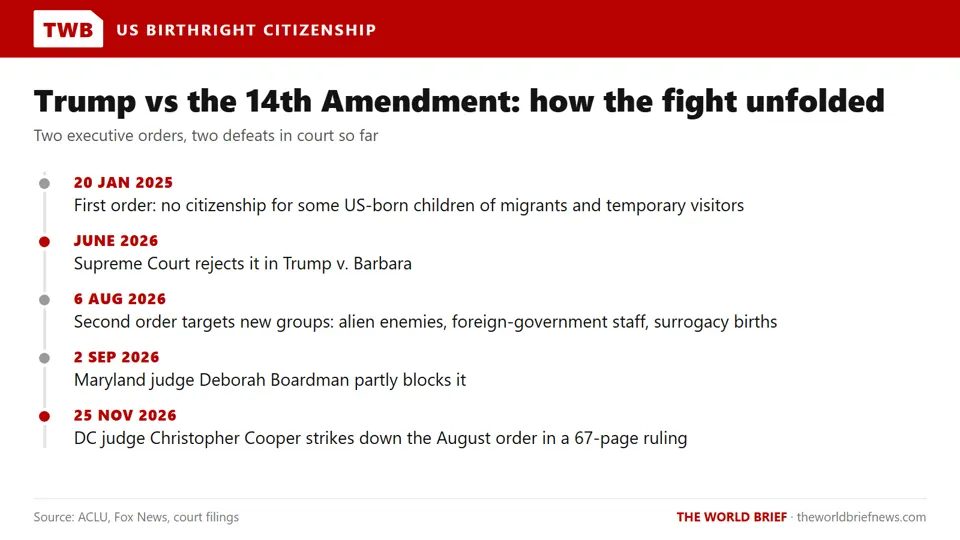
- The Supreme Court had already rejected Trump's first, broader order in June 2026 in Trump v. Barbara
- The White House called Cooper an 'activist judge' and the administration is expected to appeal
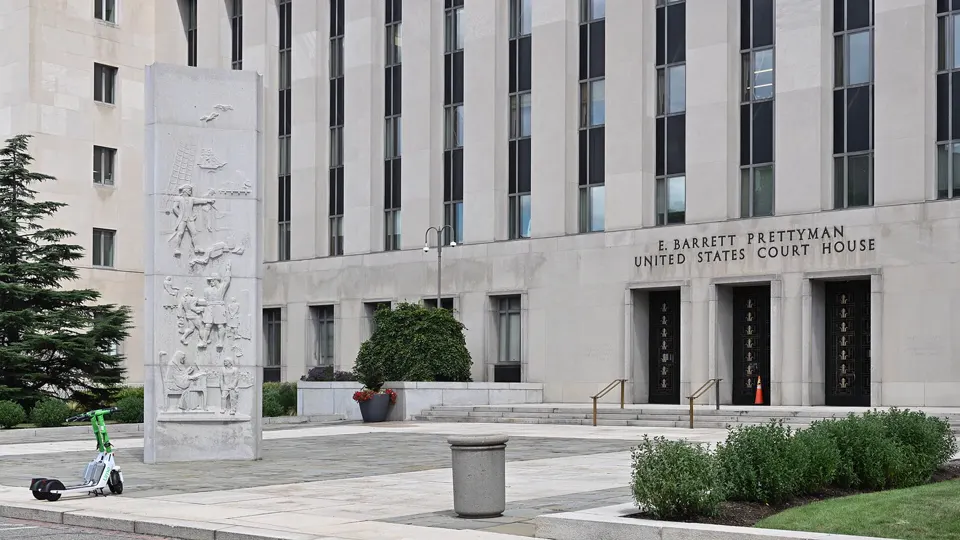
A federal judge in Washington, DC, has struck down President Donald Trump's second attempt to restrict birthright citizenship, ruling on Wednesday, 25 November 2026, that the President "cannot carve out new exceptions" to the right of US-born children to American citizenship.
US District Judge Christopher Cooper issued a 67-page ruling against an August executive order that targeted children born to parents the administration called "alien enemies", to certain foreign-government employees, and to foreign parents using paid surrogates in the US, Fox News reported.
The ruling in brief
- Case: Nathan v. Trump, brought by the American Civil Liberties Union (ACLU) and partner groups on behalf of affected families.
- Order struck down: Trump's 6 August 2026 executive order on birthright citizenship.
- Who it protects: US-born children of some foreign-government and international-organisation staff, of parents labelled "alien enemies", and of foreign parents who used US surrogacy.
- Earlier defeat: the Supreme Court rejected Trump's first, broader order in June 2026 in Trump v. Barbara.
- Next: the administration is expected to appeal.
What the judge said
"The merits in this case are clear-cut," Cooper wrote. "The Supreme Court has twice confirmed that all children born in this country are U.S. citizens, save only for the small handful who are not subject to U.S. law."
He pointed to the Supreme Court's June 2026 ruling and to United States v. Wong Kim Ark (1898), which confirmed the citizenship of a man born in San Francisco to Chinese parents. That case allowed only narrow exceptions, such as children of foreign diplomats and of enemy forces occupying US territory.
On surrogacy, Cooper said foreign parents choose US surrogacy "precisely to have the child be governed by U.S. law". He noted that the State Department had recognised the citizenship of such children before the August order.
The White House response
"This is just another ruling from an activist judge appointed by Obama attempting to thwart President Trump's commonsense agenda," White House spokeswoman Lauren Bis said in a statement to Fox News Digital. The administration is expected to ask a higher court to let the order take effect while the case continues, a process that could take months.
The ACLU said the ruling rejected the administration's attempt to create more exceptions to a constitutional guarantee. The case was brought with groups including the Asian Law Caucus and the NAACP Legal Defense and Educational Fund.
Read more on TWB: US stock futures fall as Trump plans new tariffs
What it means for Indian families
- H-1B and student families: Trump's first order would have denied citizenship to many children of parents on temporary visas, including H-1B workers, a large share of whom are Indian. The Supreme Court's June ruling protects them, and this new ruling does not change that.
- Embassy and consulate staff: the August order covered certain staff of foreign governments beyond ambassadors. Children born in the US to some Indian government employees posted there could have been affected. The ruling protects them for now.
- Surrogacy: Indian and other foreign couples who use paid surrogates in the US were directly targeted. The ruling restores the earlier position, but families should watch for an appeal.
- Travel order: a separate Trump order told officials to curb travel to the US for the purpose of giving birth there. This ruling does not cover that order.
TWB analysis: why the courts keep saying no
The 14th Amendment says people born in the US and "subject to the jurisdiction thereof" are citizens. Both of Trump's orders tried to stretch the narrow historical exceptions to that phrase. Two courts and the Supreme Court have now refused. Unless Congress passes a law, or the Supreme Court changes its reading of the 14th Amendment, an appeal faces a difficult path.
What we don't know yet
It is not yet known when the administration will file its appeal, or whether an appeals court will pause Cooper's ruling in the meantime.
With inputs from Fox News, Newspoint and the ACLU.
More on The World Brief
- More world news
- US court summons Ajit Doval in Pannun case
- Trump, Xi and Putin sign peace declaration at Shenzhen summit
Sources
- ACLU: Nathan v. Trump case page
- Fox News (via MSN): Trump's birthright citizenship restrictions struck down again by DC federal judge, 25 Nov 2026
- Newspoint (via MSN): US court blocks new Trump citizenship curbs, 26 Nov 2026
- India TV: US court blocks Trump's attempt to restrict birthright citizenship, 26 Nov 2026