Cabinet clears ₹11,000 crore scheme to make tunnel borers, cranes and excavators in India: 5 key decisions explained
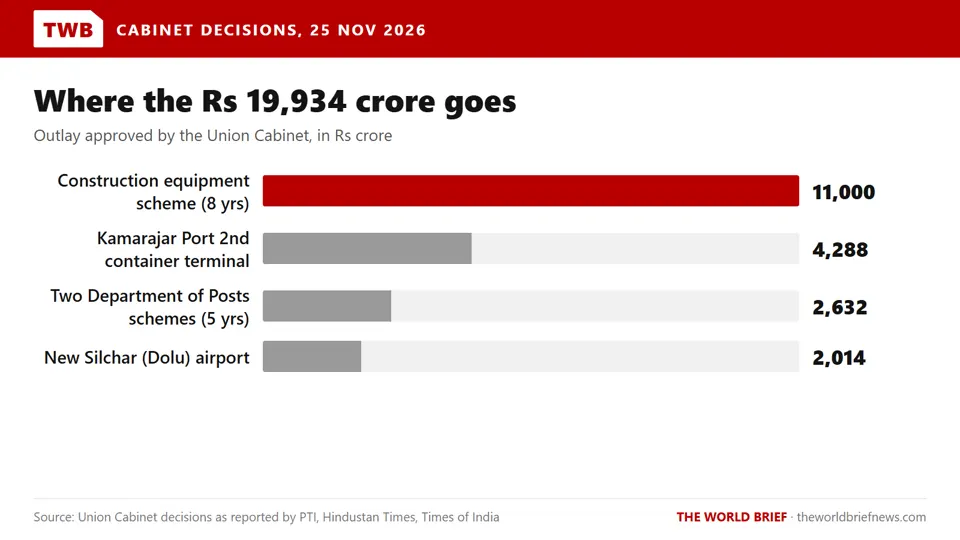
The Union Cabinet approved a ₹11,000 crore scheme to cut India's 45% import dependence in construction and infrastructure equipment, along with a new container terminal at Kamarajar Port, a greenfield airport at Silchar and two postal schemes, a package of about ₹19,934 crore.
Key points
- ₹11,000 crore Scheme for Enhancement of Construction and Infrastructure Equipment (CIE) Manufacturing Ecosystem, run by the Ministry of Heavy Industries for 8 years from 2026-27
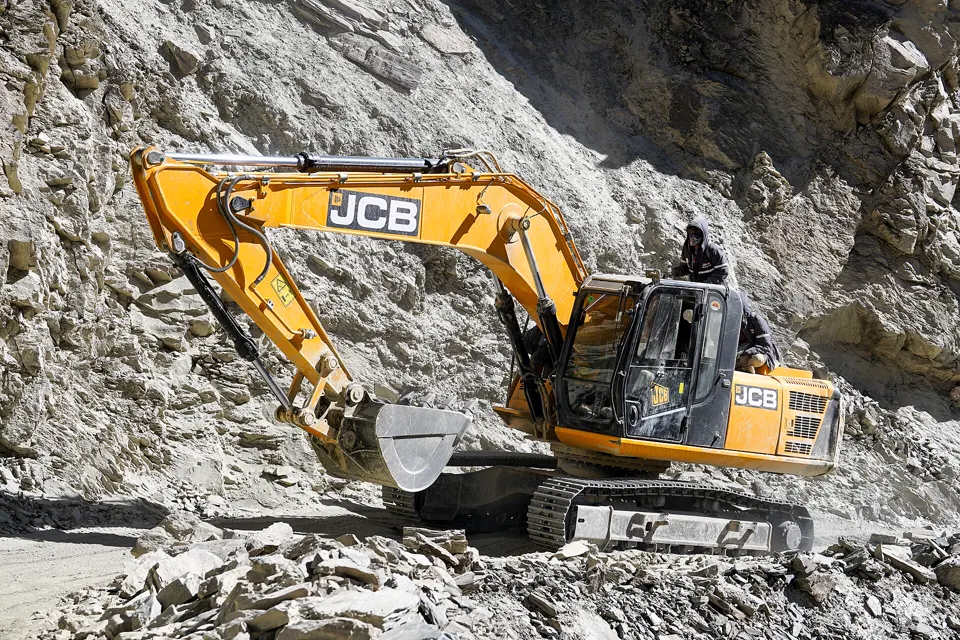
- Covers 7 equipment types that are fully or largely imported, including tunnel boring machines, off-highway trucks, excavators, cranes, loaders, piling rigs and drilling machines
- Sales-linked incentives of 13% to 8% of incremental sales over 5 years, plus up to ₹375 crore for a testing facility
- India's CIE industry is the world's third largest (about ₹97,000 crore in FY25), but about 45% depends on imports
- Also approved: ₹4,288 crore second container terminal at Kamarajar Port, ₹2,014 crore Silchar (Dolu) airport, ₹2,632 crore for two postal schemes
The Union Cabinet on Wednesday approved an ₹11,000 crore scheme to make more construction and infrastructure equipment, from tunnel boring machines to giant cranes, in India instead of importing it. Ministers also cleared a new container terminal in Tamil Nadu, a new airport in Assam and two schemes for India Post.
Together the decisions add up to about ₹19,934 crore, Union Minister Ashwini Vaishnaw said after the Cabinet meeting chaired by Prime Minister Narendra Modi.
Quick facts
- Scheme: Scheme for Enhancement of Construction and Infrastructure Equipment (CIE) Manufacturing Ecosystem, ₹11,000 crore.
- Period: 8 years, 2026-27 to 2033-34; run by the Ministry of Heavy Industries.
- Covers: tunnel boring machines, off-highway trucks, excavators, cranes, loaders, piling rigs and drilling machines.
- Support: sales-linked incentives of 13% down to 8% of incremental sales over five years, and up to ₹375 crore for a testing facility.
- The gap: India's CIE market is the world's third largest, about ₹97,000 crore in 2024-25, yet about 45% depends on imports.
Why India wants to make its own heavy machines
India is building highways, metros, tunnels, ports and dams at record pace, but much of the heavy equipment used comes from abroad. The seven categories covered by the scheme are fully or largely imported, PTI reported.
The government says the market is set to more than double to about ₹2.28 lakh crore by 2029-30. "This will promote self-reliance and help ensure India's significant participation in the global CIE market," the Cabinet said in a statement quoted by Hindustan Times. Equipment such as ship-to-shore cranes and hydraulic excavators are among the items the government wants made locally.
The other four decisions
- Kamarajar Port, Tamil Nadu (₹4,288 crore): a second, 900-metre container terminal under a public-private partnership, able to handle 2 million TEUs (standard containers) a year and ships carrying up to 24,346 TEUs.
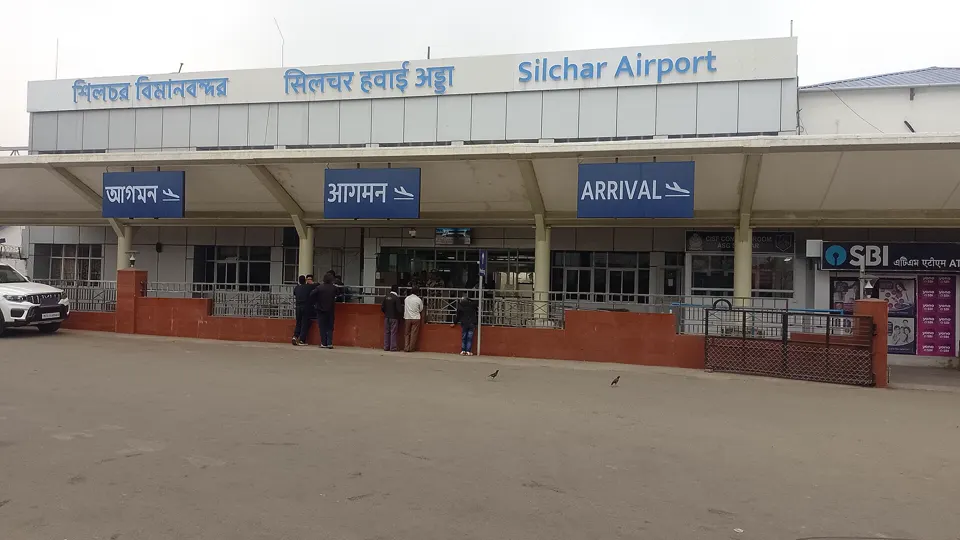
- Silchar, Assam (₹2,014 crore): a new greenfield airport, named Dolu airport, for up to 1.01 million passengers a year, because the existing airport is beyond capacity and cannot expand.
- Postal Operations (₹1,141 crore): modernising 160 mail hubs, 7,000 delivery offices, 67 parcel hubs and 510 parcel packaging units.
- Second postal scheme: upgrading post office buildings and protecting heritage structures. The two postal schemes total ₹2,632 crore over five years (2026-27 to 2030-31).
Vaishnaw said Indian ports now handle 25.7 million TEUs, up from 17.2 million in 2019-20, and traffic is expected to reach 40 million TEUs by 2030.
TWB analysis: good timing, awkward timing
The scheme pays companies a share of their extra sales, the same basic design as India's Production Linked Incentive (PLI) schemes. It was approved on the same day the US Trade Representative proposed tariffs of up to 25% on Indian goods, partly because of such incentives. Heavy equipment is not among the sectors the US named, but the overlap shows how India's factory push and its trade talks with Washington are now tied together.
What it means for you
- Jobs: new or bigger equipment plants could add factory and engineering jobs, along with work for component suppliers.
- Projects: cheaper, locally made machines could, over time, lower costs and delays in road, metro and tunnel projects.
- North-east travellers: Silchar and Barak Valley residents get a bigger airport once it is built; no completion date has been announced.
- Post offices: faster parcel handling is planned, especially in rural areas.
What we don't know yet
The full guidelines, including which companies can apply and the exact incentive rate for each year, have not been published yet. Completion dates for the port terminal and Silchar airport were not given.
More on The World Brief
- More India news
- Government's new policy on pre-NELP oil and gas blocks
- PANI project: undersea cable to connect 8 Andaman islands
Sources
- Press Trust of India (via MSN): Cabinet approves Rs 11,000-cr scheme to boost CIE manufacturing ecosystem
- Hindustan Times (via MSN): Cabinet clears Rs 11k-cr scheme to boost infrastructure goods manufacturing
- The Times of India (via MSN): Cabinet clears Rs 19,934 cr package; key decisions
- The Hindu: Cabinet approves Rs 11,000-crore scheme to boost CIE manufacturing ecosystem
- NDTV: Cabinet clears Rs 11,000-crore push for construction equipment manufacturing
- Press Information Bureau (Cabinet decisions)