COP31 collapses without a deal over fossil fuels: what failed in Antalya, and where India stood
The UN climate summit in Türkiye collapsed after two days of overtime when the EU and others rejected a text that left out fossil fuels. India, speaking for like-minded developing countries, said it was ready to accept the text despite concerns about fairness and finance.
Key points
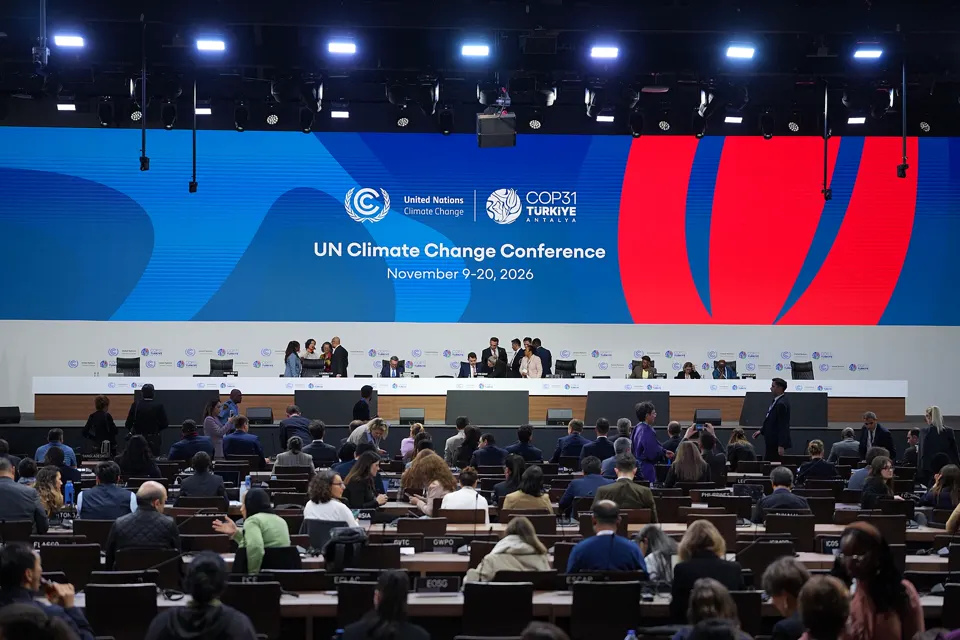
- COP31 in Antalya, Türkiye, ended on Sunday without an agreed main decision, after two weeks of talks and two days of overtime
- The EU, Panama, the Marshall Islands and others objected because the final draft did not mention fossil fuels
- India, for the Like-Minded Developing Countries, said equity and rich nations' historical responsibility were not reflected, but it was willing to move forward
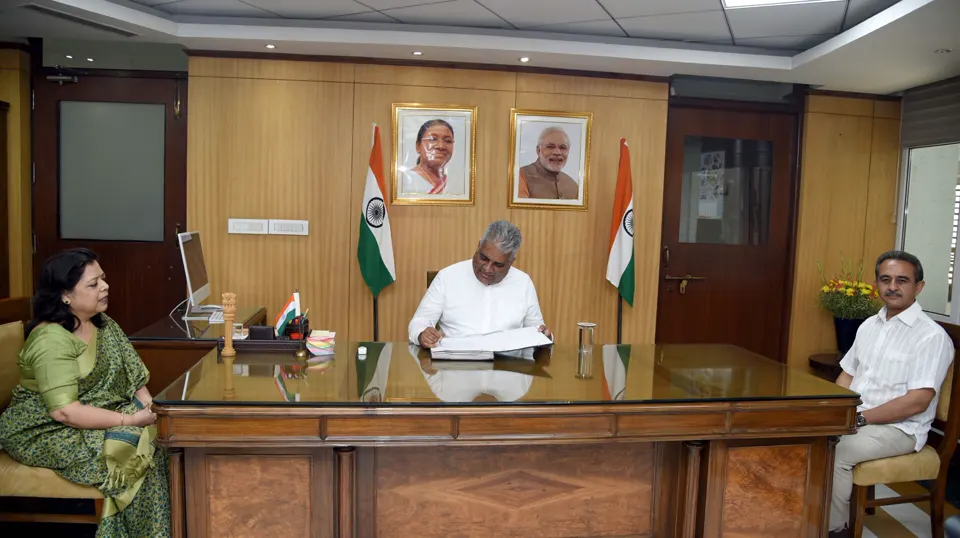
- Environment Minister Bhupender Yadav said India 'engaged constructively till the very end' and regretted that no consensus was reached
- The draft accepted that warming is now on course to pass 1.5°C; the next summit, COP32, is in Addis Ababa, Ethiopia
The UN climate summit in Antalya, Türkiye, ended on Sunday night without an agreed final decision. After two weeks of talks and two extra days of negotiation, countries could not settle a fight over one phrase: fossil fuels.
According to several reports, this is the first COP since Copenhagen in 2009 to end without an agreed main outcome. UN News called it the longest-running climate summit on record.
COP31 in 60 seconds
- What failed: the main "cover decision", the political text that sums up a summit.
- Why: the last draft did not mention fossil fuels. The EU called that "unconscionable".
- Who objected: the EU, Panama and the Marshall Islands, among others.
- India's line: the text was unfair to developing countries, but India was willing to accept it to keep the process moving.
- Next: COP32 in Addis Ababa, Ethiopia.
What went wrong
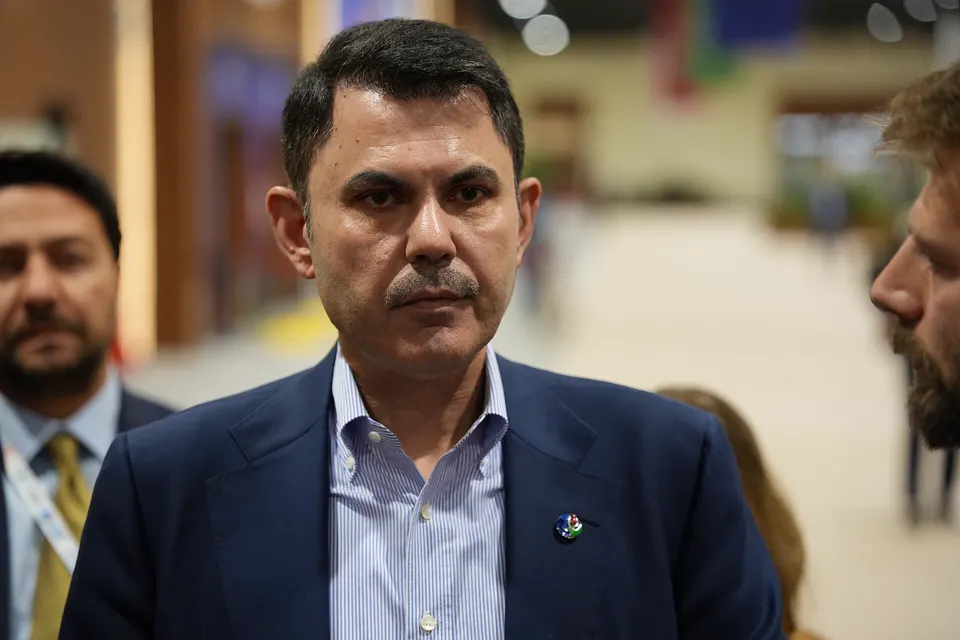
Australia's Chris Bowen, who led the negotiations, and Turkish environment minister Murat Kurum, the COP31 president, produced four drafts. Each tried to please two camps:
- Countries most at risk from climate change, and the EU, wanted a clear promise to move away from coal, oil and gas.
- Countries whose economies depend on fossil fuel exports did not want that wording.
The final draft dropped any reference to fossil fuels. It did acknowledge that the world is now on course to overshoot the 1.5°C warming limit set in Paris in 2015, and called for more technology to remove carbon from the air.
That was not enough for the objectors. "I understand that there is no agreement on this text," Kurum told the closing session, so the decisions were not adopted.
Where India stood
India spoke at the closing session on behalf of the Like-Minded Developing Countries (LMDC), a group that includes China and Saudi Arabia. Amandeep Garg, an Additional Secretary in the Environment Ministry, made three points, according to news agency ANI:
- Fairness: the text did not properly reflect equity or "common but differentiated responsibilities", the idea that rich countries, which emitted most historically, should do more.
- History: the text did not ask whose past and current emissions had used up the world's carbon budget.
- Money: developed countries had "refused to engage" on climate finance, Garg said.
Even so, he said India was "willing to move forward" with the text to protect the consensus process.
Environment Minister Bhupender Yadav later wrote on X that India "engaged constructively till the very end", working with its BASIC and LMDC partners, and regretted that no consensus was reached. He said the failed deal does not pause India's climate action, pointing to more than 170 GW of solar power capacity.
Why it matters for India
- Climate finance: India needs large sums for cleaner power, transport and adaptation. A summit with no agreement on money makes that harder.
- Coal: India still relies on coal for most of its electricity. A global fossil-fuel phase-out promise is the kind of commitment India has resisted unless rich nations move first and pay more.
- Heat and floods: passing 1.5°C means more extreme heat, floods and crop losses, which hit countries like India hardest.
Was anything agreed?
Yes, outside the main text. UN climate chief Simon Stiell said COP31 still delivered "real progress and concrete results" on a separate action track. The presidency listed:
- a goal to raise global geothermal energy to 12 times 2025 levels by 2050;
- more than 80 countries backing a target for electricity to make up 35% of global energy use by 2035;
- work on greener freight corridors.
Stiell also said he would seek advice on "areas of potential reform" to the rule that every decision needs consensus.
What the UN chief said
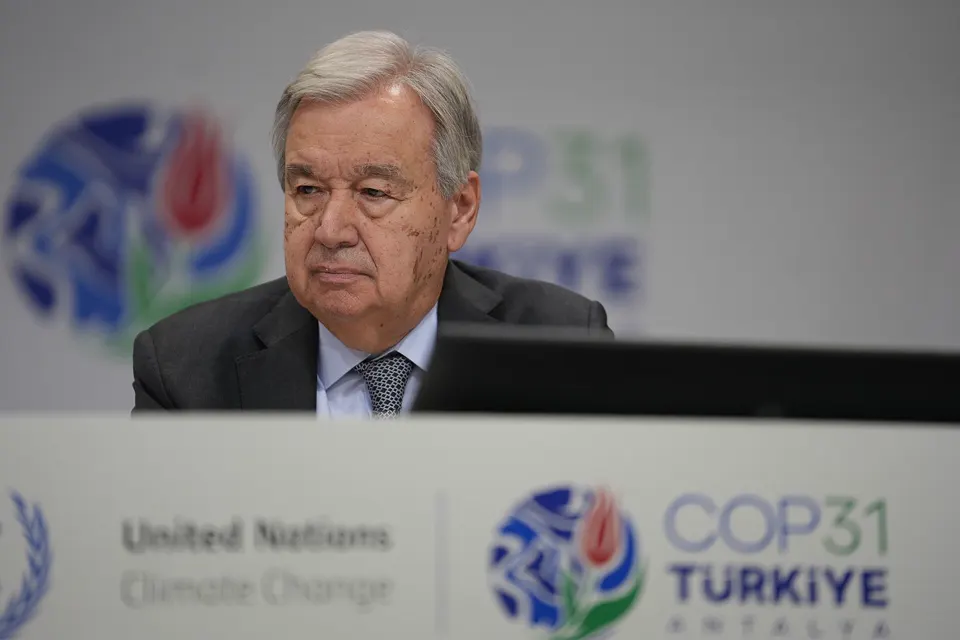
António Guterres said he was "deeply disappointed". His key line: "There may be no consensus in the negotiating room. There is no ambiguity in the science."
What happens next
The unresolved fights, from fossil fuels to climate finance, now move to COP32 in Addis Ababa, Ethiopia. Countries are still bound by what they agreed earlier, including the 2023 Dubai pledge to transition away from fossil fuels.