Saudi Arabia's Jazan refinery hit in Houthi attack: 1 killed, operations halted. What it means for oil and Indians in the Gulf
A projectile struck Saudi Aramco's Jazan refinery near the Yemen border on Thursday, killing a Nepali worker, injuring several others and halting some operations, Saudi Arabia's Energy Ministry said. The Saudi-led coalition blamed Yemen's Houthis. It is the third straight day of strikes on Saudi targets.
Key points
- An aerial projectile hit the Jazan refinery on Thursday, causing a fire and halting some operations, the Saudi Energy Ministry said
- A Nepali worker was killed and several workers of various nationalities were injured
- The Saudi-led coalition blamed Yemen's Houthis and said it destroyed a missile launcher in Hodeidah used in the attack
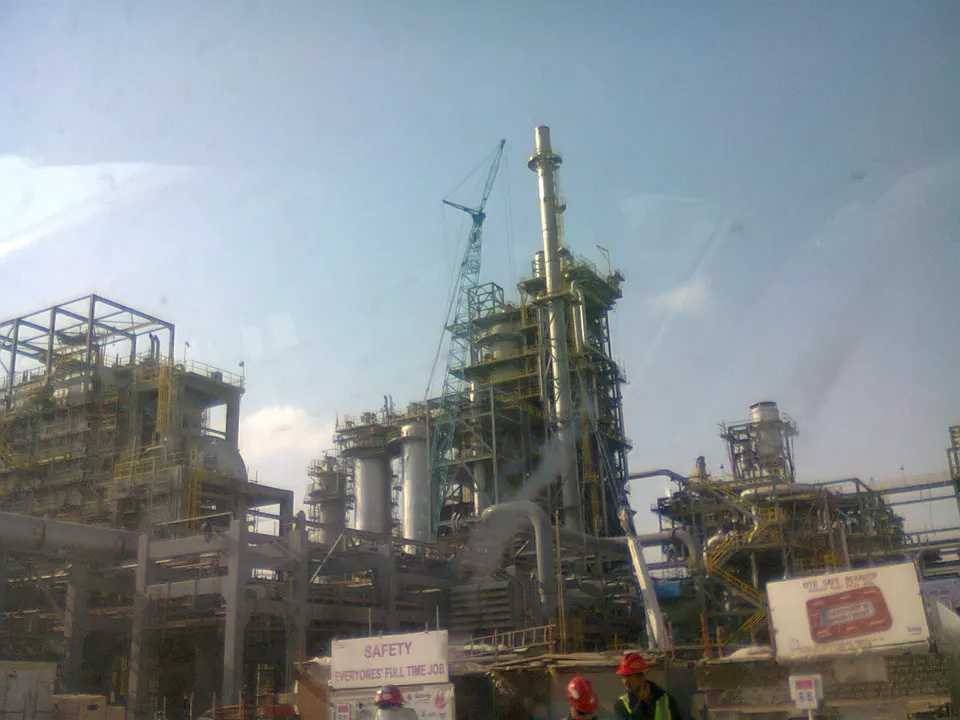
- The refinery can process up to 400,000 barrels of crude a day
- It follows the 24 November strike on a Riyadh tower that injured two Indians and Houthi claims of attacks on Ras Tanura
A projectile struck Saudi Aramco's Jazan refinery in southwestern Saudi Arabia on Thursday, killing a Nepali worker, injuring several others and forcing a halt to some operations, the kingdom's Energy Ministry said.
The ministry did not say who was behind the attack, but the Saudi-led military coalition fighting in Yemen blamed the Iran-aligned Houthis. It is the latest in a string of strikes on Saudi targets this week, including one that injured two Indians in Riyadh.
What we know
- Where: the Jazan refinery on the Red Sea coast, near the border with Yemen.
- Casualties: one Nepali worker killed; several workers of various nationalities injured and treated, the Energy Ministry said.
- Damage: a fire broke out and some operations were temporarily halted; the fire was brought under control, India Today reported.
- Size: the refinery is designed to process up to 400,000 barrels of crude oil a day.
- Blame: the coalition said the Houthis used a missile launch platform in Yemen's Hodeidah, which it says it has destroyed. The Houthis had not commented, Al Jazeera reported.
What happened
Saudi Arabia's civil defence had issued a danger alert for Jazan province before the strike, Al Jazeera reported. Emergency and technical teams were sent to assess the damage and check that the plant was safe.
Coalition spokesman Turki al-Maliki said on X that attacks on civilians and civilian infrastructure would be "met with a firm military response". Later, the coalition said it had destroyed the launch platform in Hodeidah.
A week of strikes on Saudi Arabia
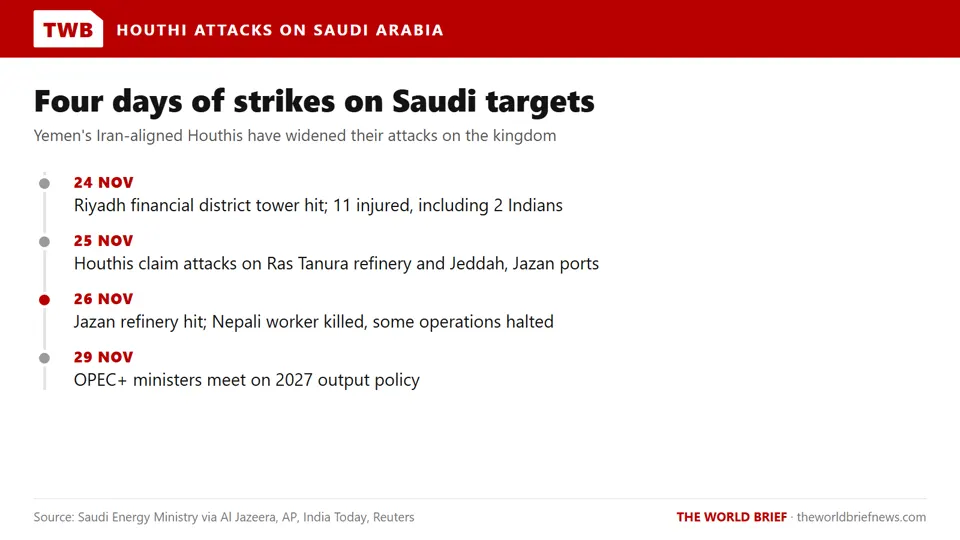
On 24 November a strike on a tower in Riyadh's King Abdullah Financial District injured 11 people, including two Indian nationals, according to Saudi Civil Defence. A day later, the Houthis claimed attacks on Ras Tanura, the kingdom's largest refinery and a key crude export hub, and on the Red Sea ports of Jeddah and Jazan.
Fighting in Yemen's civil war has flared since July. The Houthis, who control the capital Sanaa, have fired missiles and drones at Saudi airports, oil sites and office buildings, India Today reported. The Associated Press reported Saudi airstrikes in western and southwestern Yemen on Thursday, according to Houthi officials.
Oil prices on edge
Brent crude rose 3.5% on Wednesday after the Houthi claims about Ras Tanura and was trading at about $94.71 a barrel early on Thursday, Reuters reported. Ships hitting mines in the Strait of Hormuz added to supply worries. Prices have swung since: CNBC-TV18 reported Brent crossed $96 after the Jazan strike, while Hindustan Times later reported it slipped below $94. OPEC+ ministers meet on 29 November to decide output policy for 2027.
What it means for India
- Oil bill: India imports most of its crude oil, and Saudi Arabia is one of its biggest suppliers. A sustained rise in Brent increases the cost for refiners and the government.
- Pump prices: petrol and diesel prices in India do not change automatically with daily crude moves; no change has been announced.
- Indians in Saudi Arabia: more than two million Indians live and work in the kingdom. No Indian casualties have been reported in the Jazan attack. Indians needing help can contact the Embassy of India in Riyadh or the Consulate in Jeddah.
What we don't know yet
Saudi Arabia has not said how much of the refinery's output is affected or when full operations will resume. The Houthis had not commented on the Jazan strike at the time of writing.
With inputs from Reuters, AP and Al Jazeera.
More on The World Brief
- More world news
- Riyadh financial district tower hit, 2 Indians injured
- Strait of Hormuz: three tankers struck, what it means for India's oil
Sources
- Al Jazeera (via MSN): Attack on Saudi's Jazan refinery kills one person, disrupts operations
- Press Trust of India / AP (via MSN): Strikes reported in Saudi Arabia and in Houthi-controlled parts of Yemen
- India Today (via MSN): 1 killed, several injured as Houthi projectile strikes Saudi oil refinery
- Reuters (via MSN): Oil rises on supply concerns as Iran claims mine strikes on ships
- Al Jazeera live blog, 27 November