Delimitation Bill 2026 explained: Lok Sabha could grow to 850 seats, every state gets 50% more, shares frozen till 2051
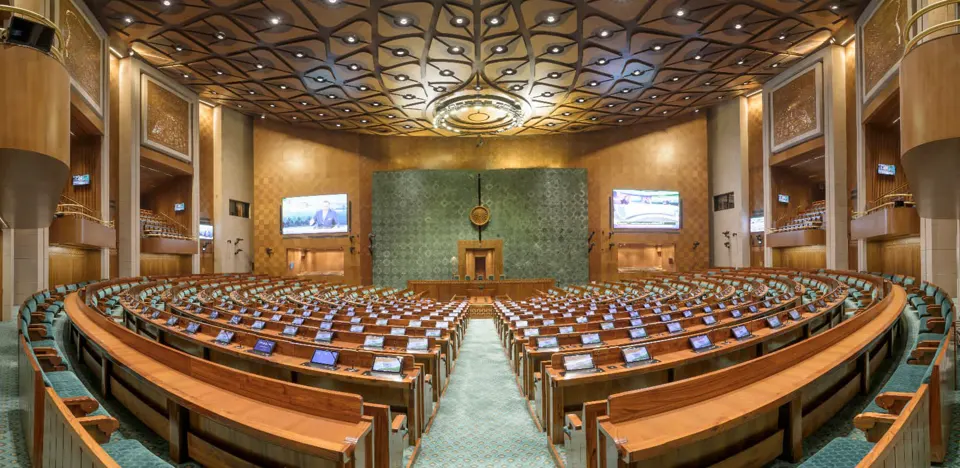
The Union Cabinet has cleared a fresh Constitution amendment and a new Delimitation Bill that would raise every state's Lok Sabha seats by 50%, lift the House's ceiling to 850, start one-third reservation for women after delimitation and freeze the arrangement until 2051. Parliament meets from 30 November to vote.
Key points
- The Cabinet cleared the Constitution (132nd Amendment) Bill and the Delimitation (Second) Bill on Friday, 27 November
- Every state's and Union Territory's Lok Sabha seats rise by 50%, keeping each state's share the same
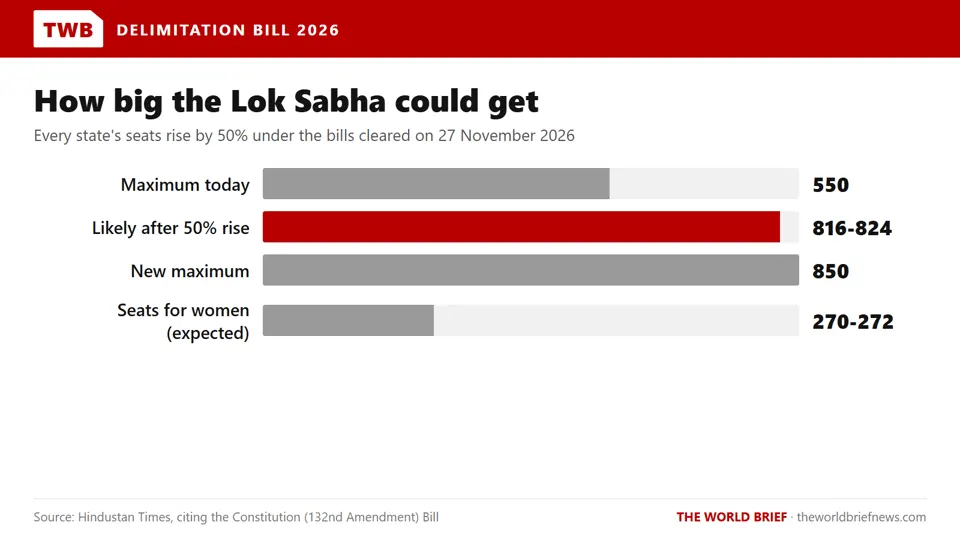
- The Lok Sabha ceiling rises to 850 (815 from states, 35 from UTs), from 550 now; the actual size is likely to be 816-824, HT reported
- One-third of seats will be reserved for women after delimitation, about 270-272 Lok Sabha seats
- A three-member delimitation commission will be led by a serving or former Supreme Court judge
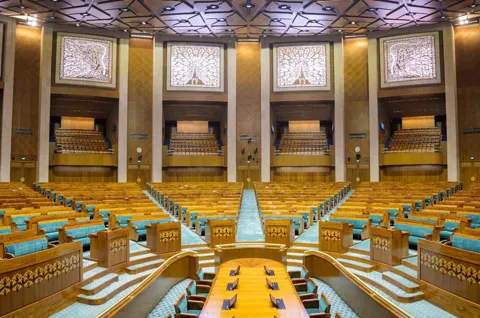
The Union Cabinet has cleared two bills that could reshape India's Parliament for the next 25 years. If they pass, every state's Lok Sabha seats will rise by 50%, the House's maximum size will go up to 850, and one-third of seats will be reserved for women after a fresh delimitation.
The Constitution (132nd Amendment) Bill, 2026 and the Delimitation (Second) Bill were approved on Friday, 27 November, ahead of the special sitting of Parliament that begins on Monday, 30 November, Hindustan Times reported. The arrangement would be frozen until 2051.
Quick facts
- What: a Constitution amendment plus a new Delimitation Bill, cleared by the Cabinet on 27 November.
- Lok Sabha: each state and UT gets 50% more seats; the ceiling rises from 550 to 850 (815 from states, 35 from UTs).
- Likely size: between 816 and 824 seats, depending on how half-seats are rounded, HT reported.
- Women: one-third reservation starts after delimitation; about 270-272 Lok Sabha seats.
- State assemblies: also up 50%, with a new cap of 650 seats (was 500).
- Freeze: seat shares fixed until 2051.
What the new formula changes
The biggest change is how seats are shared. Earlier plans worried southern states, which feared losing influence because their population has grown more slowly than in the north. The new bill avoids that fight by giving every state the same 50% increase on its current seats. Each state's share of the Lok Sabha stays as it is today.
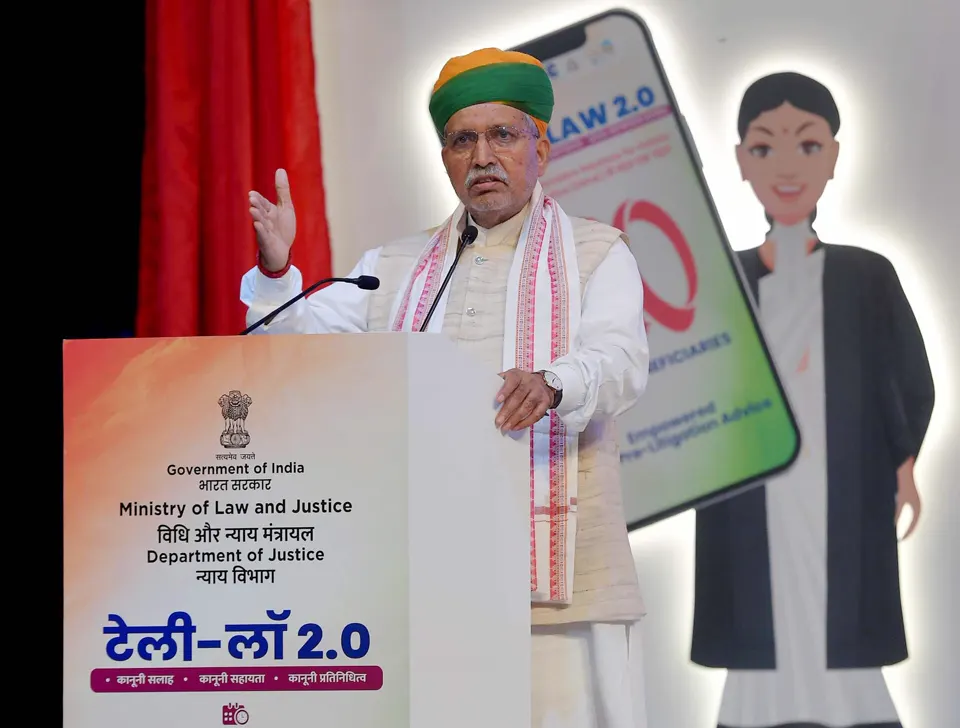
"Such a uniform increase would enhance the overall representation of the people while maintaining the existing relative distribution of seats among the states," Law Minister Arjun Ram Meghwal said in the bill's statement, according to HT.
State assemblies would grow by 50% too. The cap for assemblies rises to 650 seats so that the biggest state fits: Uttar Pradesh's assembly would go from 403 seats to more than 600, HT reported. The old cap of 500 could not have allowed that.
Who will redraw the boundaries
A three-member delimitation commission will be set up once the bill becomes law, according to a copy of the bill seen by HT:
- Chairperson: a serving or former Supreme Court judge, appointed by the Centre.
- Member: the Chief Election Commissioner, or an Election Commissioner he nominates.
- Member: the State Election Commissioner of the state concerned (in Meghalaya and Nagaland, a person nominated by the Governor).
- Associate members: five Lok Sabha MPs and five MLAs from each state, nominated by the Speakers. They can advise but cannot vote.
The commission will draw constituencies using the latest census figures, and its term will be fixed by a government notification. Seats reserved for women will be rotated according to the commission's order and stay in place for 15 years, HT reported.
Will it pass this time?
A Constitution amendment needs a two-thirds majority of members present and voting in both Houses, plus approval from half the states. In April, the earlier 131st Amendment Bill failed in the Lok Sabha. Since then, rebellions in the Trinamool Congress and the Shiv Sena (UBT) and softer positions from the DMK and NCP (Sharadchandra Pawar) have brought the NDA within reach of the numbers, HT reported.
The picture is still moving. NCP(SP) MLA Jitendra Awhad said his party would support the bill, but working president Supriya Sule said the final decision would be announced on the floor of the Lok Sabha on Monday. The opposition INDIA bloc has opposed the move.
TWB analysis: a political trade-off
The uniform 50% rise is a compromise. It answers the southern states' fear of losing seats, but it also gives up on matching seats to population, which the Constitution originally intended after every census. A vote in Uttar Pradesh or Bihar will continue to count for less than one in Kerala or Tamil Nadu in terms of MPs per person until at least 2051. In return, the Centre gets a route to start women's reservation, possibly in time for the 2029 general election, as The Tribune reported the government is aiming for.
What it means for you
- More MPs, smaller constituencies: each MP would represent fewer people, so your constituency boundaries are likely to change.
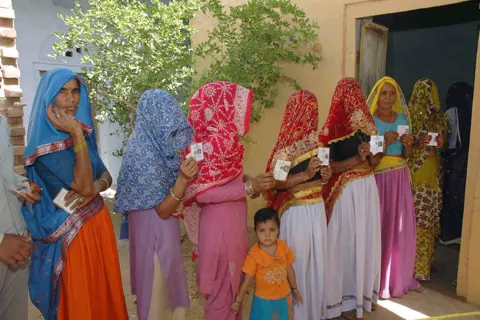
- Women candidates: about one in three seats would be reserved for women, rotating over time.
- Nothing changes yet: the bills must pass both Houses, be ratified by half the states and get the President's assent; then the commission has to finish its work.
What we don't know yet
The exact number of new seats for each state, the commission's deadline, and whether all of it can be done before the 2029 election are not yet clear. We will update this story as Parliament debates the bills.
More on The World Brief
- Parliament returns on 30 November: the numbers explained
- Supreme Court and the anti-defection law loophole
- More India news
Sources
- Hindustan Times (via MSN): Cabinet clears 50% Lok Sabha seat hike, freezes share till 2051
- Hindustan Times (via MSN): Delimitation Bill proposes formation of commission, SC judge, CEC nominee among members
- The Tribune (via MSN): Cabinet clears delimitation bill; states to get 50% increase in Lok Sabha seats
- Hindustan Times (via MSN): NCP (SP) MLA says party backs delimitation bill, Sule clarifies
- Deccan Herald: Cabinet clears Constitution Amendment Bill to raise Lok Sabha, Assembly seats by 50%
- CNBC-TV18: Cabinet clears Delimitation Bill; Lok Sabha seats to increase by 50%