Parliament returns on 30 November amid buzz over women's quota and delimitation bills: the numbers explained
The Lok Sabha will reconvene on 30 November and the Rajya Sabha on 2 December for 'essential government business', with sittings likely to end on 3 December. The government has not named the bills, but a revived women's reservation and delimitation push is widely expected. Here is what changed since the April defeat.
Key points
- Lok Sabha meets on 30 November and Rajya Sabha on 2 December; both may finish on 3 December, Parliamentary Affairs Minister Kiren Rijiju said
- No bills have been officially named; there will be no Question Hour or Zero Hour, reports say
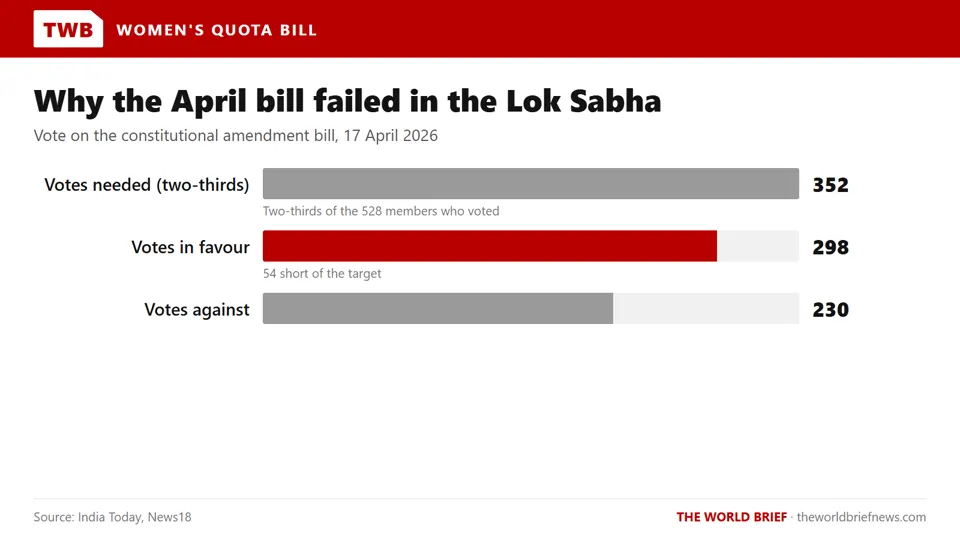
- In April a constitutional amendment to speed up women's reservation got 298 votes, 54 short of the 352 needed
- The Monsoon Session was never prorogued after 13 August, setting a record for the longest gap without closure
- 26 opposition MPs have since moved towards the NDA camp, according to India Today
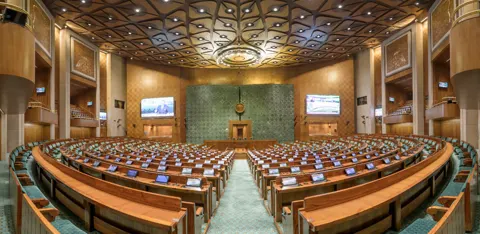
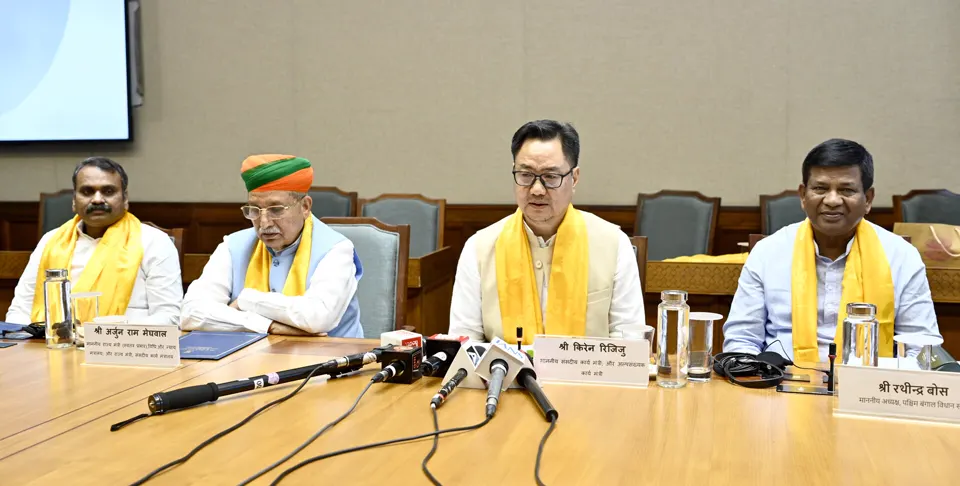
Parliament is coming back next week. The Lok Sabha will meet on 30 November and the Rajya Sabha on 2 December, and both Houses may finish by 3 December, Parliamentary Affairs Minister Kiren Rijiju said on Thursday.
The government says the sittings are to "transact essential government business" but has not said which bills it will bring. Political circles expect a fresh attempt to pass a women's reservation and delimitation package that failed in the Lok Sabha in April.
Quick facts
- Dates: Lok Sabha from 30 November, Rajya Sabha from 2 December; sittings may end on 3 December.
- No Question Hour or Zero Hour during these sittings, according to Oneindia and Times Now.
- Same session: this continues the Monsoon Session, which was adjourned on 13 August but never formally closed.
- Record gap: by 21 November the session had stayed open for 100 days after adjournment, beating the 2008 record of 87 days (India Today).
- Notice: an extra sitting of the same session needs two days' notice; a new session needs 14 days (News18).
What failed in April
On 17 April, during a special three-day sitting, the Lok Sabha voted on a constitutional amendment that would have let delimitation (redrawing constituencies) go ahead without waiting for a new Census. That would have allowed the 33% reservation for women in the Lok Sabha and state assemblies to start before the 2029 general election.
Of 528 members who voted, 298 supported it and 230 opposed it. A constitutional amendment needs two-thirds of members present and voting, so the bill fell 54 votes short of the 352 it needed, India Today reported. The government then held back two linked bills, the Delimitation Bill, 2026 and the Union Territories Laws (Amendment) Bill, 2026.
What has changed since then
The numbers in the Lok Sabha have shifted. Twenty-six MPs have left the opposition camp, India Today reported: 20 rebel Trinamool Congress MPs joined the Nationalist Citizens Party of India and pledged support to the NDA, and six Shiv Sena (UBT) MPs joined the Shiv Sena. Even so, the government would still need more support to reach two-thirds.
If all current members vote, the target would be 361, because three seats are vacant, News18 reported. A constitutional amendment must also pass the Rajya Sabha by a two-thirds majority.
The southern states' worry
The April bill also proposed raising the Lok Sabha's strength from 543 to a maximum of 850 seats. Southern states fear a smaller share of seats in a bigger House because their population has grown more slowly. The government is understood to be weighing a 50% increase in seats for every state, or keeping each state's current share, but no decision has been taken, India Today reported. The New Indian Express reported that the DMK may back a delimitation bill if Tamil Nadu's seat share is protected.
The Union Cabinet meets on Friday and is likely to discuss a bill linking women's reservation to delimitation, sources told India Today. Prime Minister Narendra Modi wrote in a signed newspaper article on Thursday that no force could stop women from getting justice, and blamed "one opposition party" for the April defeat.
TWB analysis: why the short sitting matters
Holding a four-day sitting within an unfinished session lets the government move quickly with just two days' notice. If the women's quota bill returns, the real test is the arithmetic: a few dozen votes, and whether parties from the south are reassured on seat shares, will decide whether women's reservation can start before 2029.
What it means for you
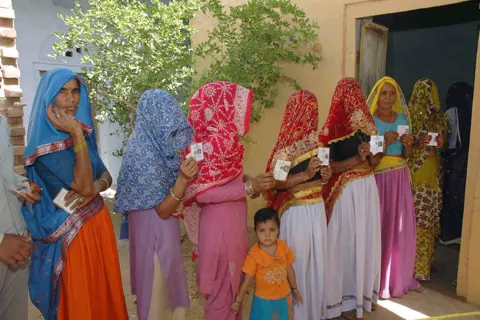
- Women voters and candidates: if passed, a third of Lok Sabha and assembly seats would be reserved for women once delimitation is done.
- Southern states: watch the formula for seat shares; it decides each state's weight in Parliament for decades.
- No routine questions: without Question Hour and Zero Hour, MPs will have fewer chances to raise local issues in these sittings.
What we don't know yet
The government has not published the list of business. It is not confirmed which bills will be introduced, or whether a separate Winter Session will be held this year. There have been four years without a Winter Session before: 1975, 1979, 1984 and 2020, News18 reported.
More on The World Brief
- More India news
- Constitution Day 2026: PM Modi's message explained
- Supreme Court and the anti-defection law loophole
Sources
- India Today (via MSN): Parliament resumes next week amid buzz over delimitation, women's quota bills
- News18 (via MSN): Parliament to reconvene on Nov 30 amid delimitation-women's quota bill buzz
- Rediff: Parliament reconvened amid buzz over delimitation, women's quota
- WION: Parliament to reconvene from Nov 30 amid buzz over delimitation, women's quota bills
- Sansad (official Parliament of India website)