Neena Gupta: the Indian mathematician on TIME100 Next who cracked a 70-year-old algebra puzzle
ISI Kolkata professor Neena Gupta has been named among TIME100 Next India 2026 leaders. In 2014 she found a counterexample to the Zariski Cancellation Problem, a question first posed in 1949. Here is what she solved, in simple words.
Key points
- Professor Neena Gupta of the Indian Statistical Institute, Kolkata, is on the TIME100 Next India 2026 list
- She is known for her 2014 work on the Zariski Cancellation Problem, first asked in 1949
- She showed a counterexample in 'positive characteristic', a key branch of algebra
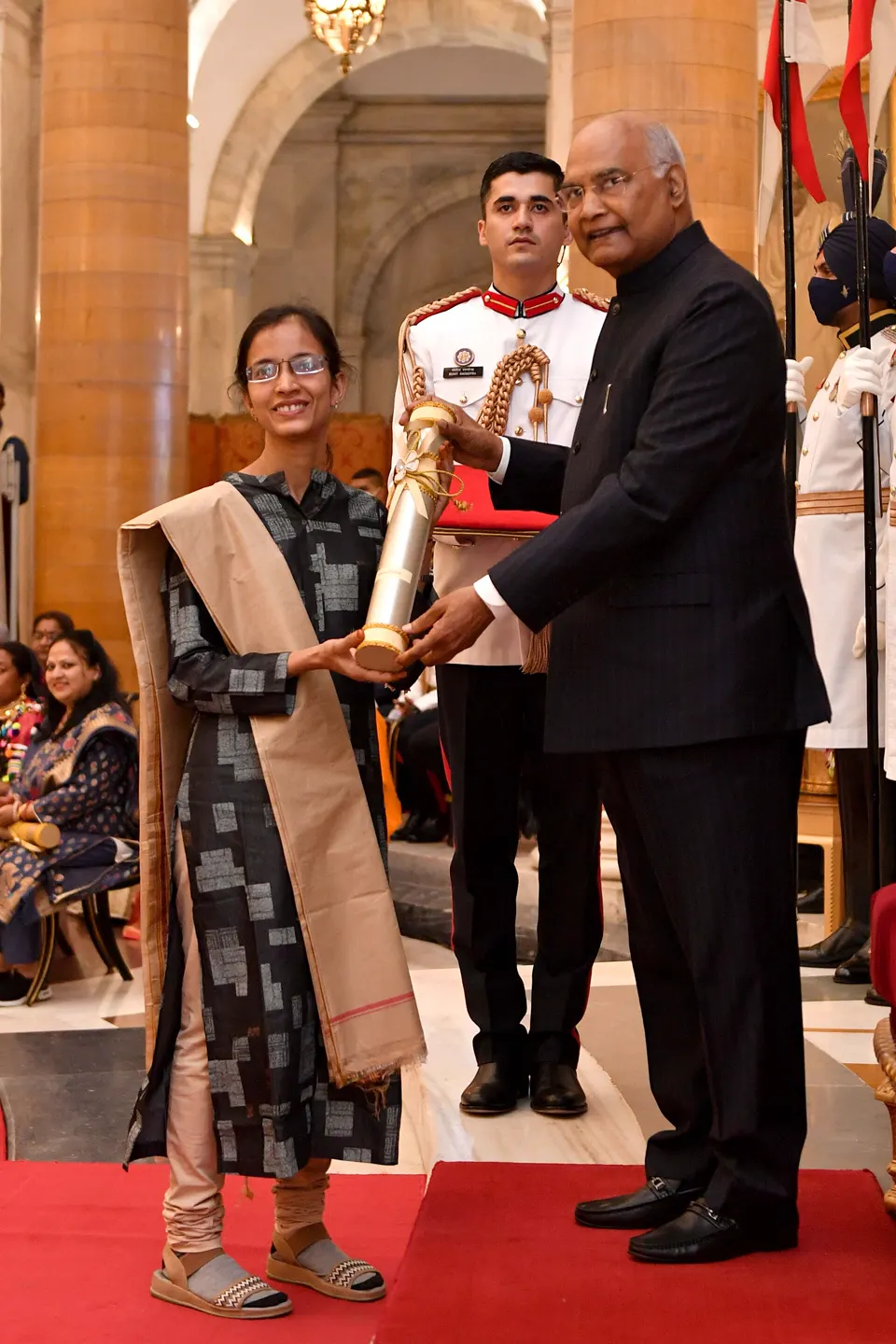
- She received the Nari Shakti Puraskar in 2022 for excellence in mathematics
- Indian Express, Inshorts and others reported the TIME recognition this week
Indian mathematician Neena Gupta, a professor at the Indian Statistical Institute (ISI), Kolkata, has been named among TIME100 Next India 2026 leaders. The recognition honours her work on a famous problem in algebra that stood for decades.
Quick facts
- Who: Professor Neena Gupta, Indian Statistical Institute, Kolkata.
- Recognition: TIME100 Next India 2026.
- Famous for: her 2014 work on the Zariski Cancellation Problem.
- The problem: first asked in 1949 by mathematician Oscar Zariski.
- Earlier honour: Nari Shakti Puraskar, 2022.
The problem, in simple words
Imagine two shapes. If you add one extra dimension to each, and they become exactly the same, were they the same to begin with? Zariski asked a precise version of this question for algebraic shapes defined by equations. For decades, mathematicians suspected the answer was "yes".
In 2014, Gupta showed that in an important branch of algebra, called positive characteristic, the answer is "no". She proved that a shape first studied by Japanese mathematician Teruo Asanuma is a counterexample. Some reports say she "solved" the problem; more precisely, she settled it for this major case.
Why it matters
- It settled a question that top mathematicians had worked on for more than 60 years.
- It shows world-class research happening at Indian public institutes.
- It is an inspiration for girls in science and mathematics, where women remain under-represented.