Gaganyaan Astronauts Float With Joy in Zero-Gravity Training on Russian Plane: Watch the Video
A video of India's Gaganyaan astronaut-designates floating and somersaulting inside a Russian Il-76MDK training aircraft has gone viral. Here is what the footage shows, how zero-gravity flights work and where India's human spaceflight mission stands.
Key points
- A viral video shows India's Gaganyaan astronaut-designates floating and somersaulting inside a Russian Il-76MDK training plane.
- Parabolic flights give about 25 to 30 seconds of weightlessness per arc, repeated 10 to 12 times a sortie.
- Reports say the flights also simulated lunar (about 16.5%) and Martian (about 38%) gravity.
- The four IAF pilots trained at Russia's Gagarin Cosmonaut Training Centre in 2020-21.
- Gaganyaan's first uncrewed test flight G1 is expected in the coming months; the crewed flight is targeted for 2027.
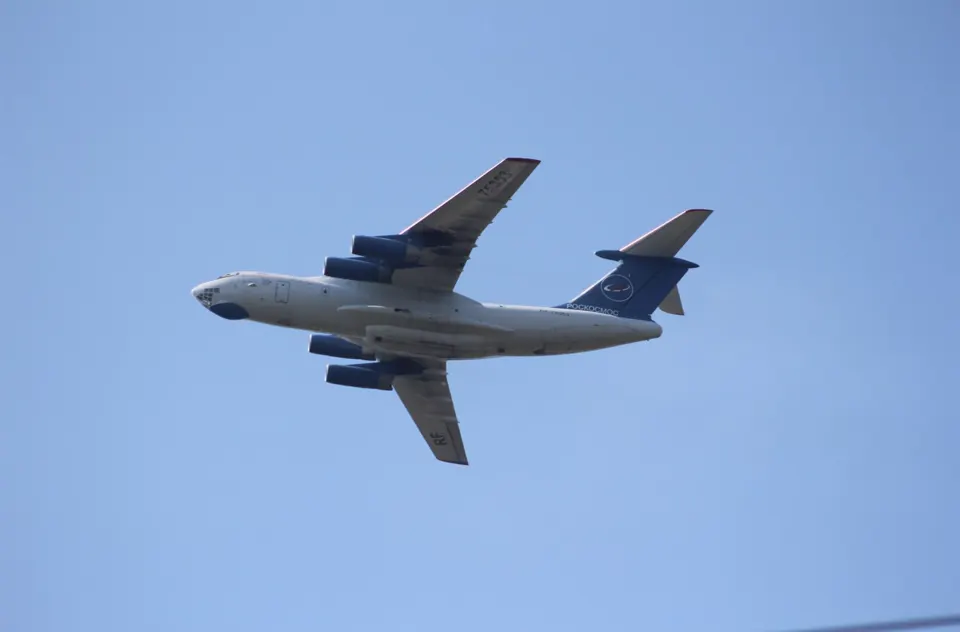
A video showing India's Gaganyaan astronaut-designates floating, turning and somersaulting inside a Russian aircraft has gone viral on social media this week. The footage, widely shared since 23 November, shows the Indian Air Force pilots weightless inside an Ilyushin Il-76MDK, a plane Russia uses to train cosmonauts for the feeling of space.
According to Gulf News and the space website Starlust, the flights simulated not only zero gravity but also the weaker pull of the Moon and Mars. ISRO has not put out a statement on the video, and the date it was filmed has not been officially confirmed.
What the video shows
In the clip, the trainees float, turn and somersault in mid-air during the brief weightless phase of each flight, before the plane pulls out of its dive and gravity returns. For many viewers, it is the first close look at how India's future astronauts prepare.
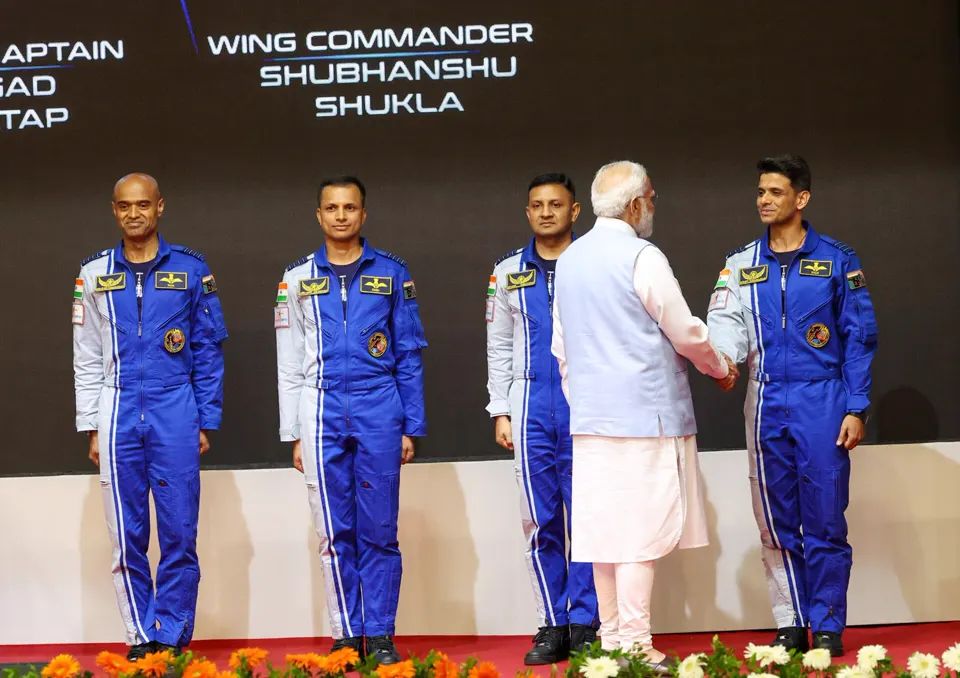
Reports say the four astronaut-designates are Group Captain Prashanth Balakrishnan Nair, Group Captain Ajit Krishnan, Group Captain Angad Pratap and Group Captain Shubhanshu Shukla. Prime Minister Narendra Modi announced their names on 27 February 2024 at the Vikram Sarabhai Space Centre in Thiruvananthapuram.
How a 'zero-gravity' flight works
The aircraft does not leave Earth's gravity. Instead, it flies a roller-coaster path called a parabola:
- The pilots climb steeply, at about 45 degrees.
- Near the top, they cut engine thrust so the plane follows a free-fall arc.
- For roughly 25 to 30 seconds, everyone inside falls at the same rate as the plane, so they float.
- The plane then pulls out of the dive, and passengers feel almost twice their normal weight for a short time.
A single training sortie usually repeats this 10 to 12 times. By changing the shape of the arc, pilots can also simulate partial gravity. The Moon's gravity is about one-sixth of Earth's (16.5 per cent), and Mars's is about 38 per cent. Practising at these levels teaches astronauts how to move, eat, and handle tools and emergencies when their bodies no longer feel normal weight.
Why India trains its astronauts in Russia
The four pilots completed about a year of basic spaceflight training at the Yuri Gagarin Cosmonaut Training Centre in Star City, near Moscow, between February 2020 and March 2021. The programme, arranged through Glavkosmos, a part of Russia's space agency Roscosmos, covered survival training, spacecraft systems, medical tests and weightlessness flights. Since returning, the group has continued mission-specific training at ISRO facilities in Bengaluru.
One of them has already been to space
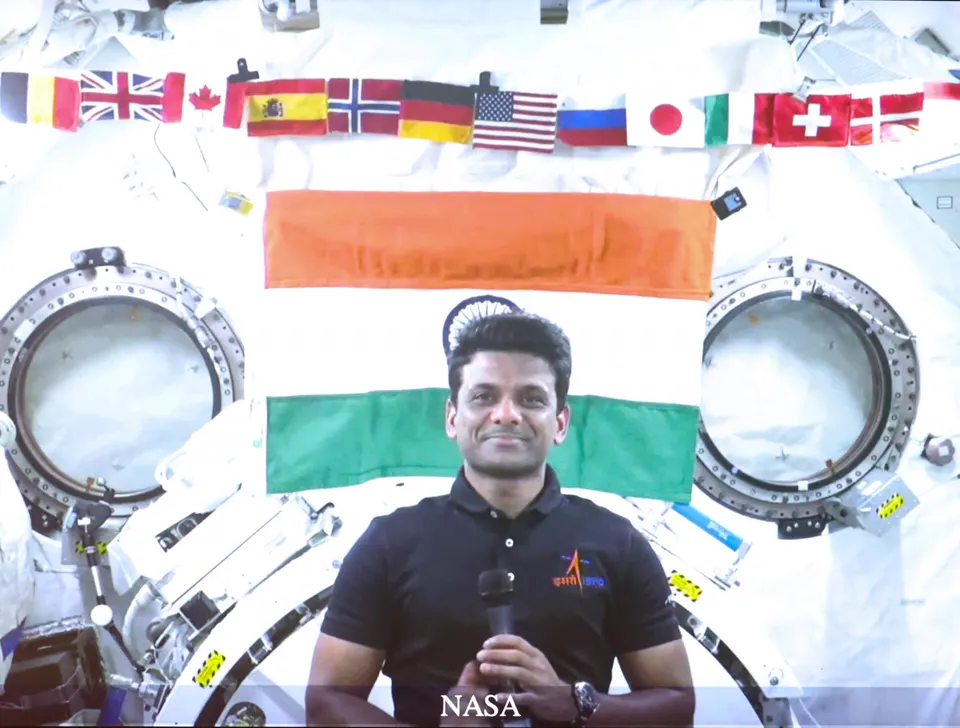
Shubhanshu Shukla became the first Indian to visit the International Space Station in June and July 2025, as pilot of the private Axiom-4 mission, with Prashanth Nair as his backup. That flight gave ISRO first-hand experience in crew training, medical monitoring and mission operations ahead of Gaganyaan.
Where the Gaganyaan mission stands
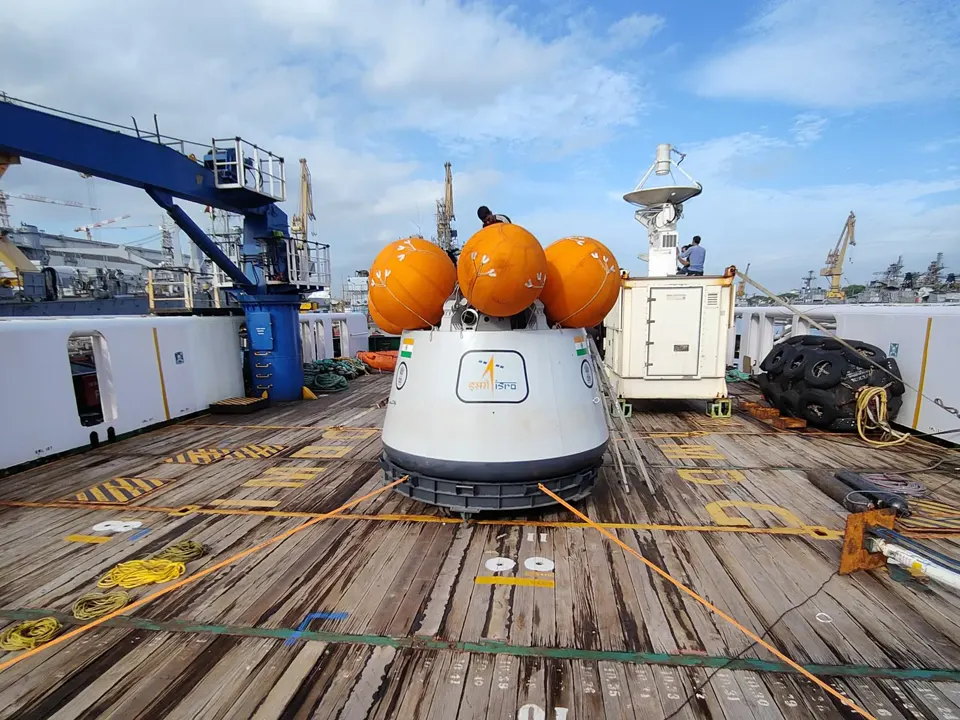
Gaganyaan is India's plan to send a crew of up to three astronauts into low Earth orbit, about 400 km above the planet, for up to three days, and bring them back safely. Before any astronaut flies, ISRO plans uncrewed test flights. The first, called G1, will carry Vyomitra, a half-humanoid robot that will check conditions inside the crew capsule.
The schedule has slipped several times. In June 2026, ISRO chairman V. Narayanan said engineers were aiming for the uncrewed launch by the end of 2026 but that the final date depended on technical progress and safety checks, The Wire reported. India Today reported on 20 November that G1 was unlikely before February 2027. The crewed flight is officially expected in 2027 but depends on the test flights going well.
Why the video matters
- It shows the human side of a programme usually seen only through rocket launches.
- Lunar and Martian gravity practice hints at India's longer-term goals: ISRO has spoken of a Bharatiya Antariksh Station by 2035 and an Indian on the Moon by 2040.
- It comes as ISRO enters the final stretch before Gaganyaan's first test flight.
With inputs from Gulf News and Starlust.